The Proposals of the Central Committee of the Communist Party of China on Formulating the 15th Five-Year Plan for National Economic and Social Development (hereinafter referred to as the Proposals) dedicates a specific chapter to “expanding high-standard opening up and creating a new landscape of mutually beneficial cooperation,” which includes “expanding two-way investment cooperation.” At a press conference held by the Central Committee of the Communist Party of China, it was emphasized that China values both GDP (Gross Domestic Product) and GNI (Gross National Income), and attaches importance not only to the “Chinese economy” but also to the “Chinese People Economy.” What does the dual emphasis on GDP and GNI, as well as on the “Chinese economy” and the “Chinese People Economy,” reveal about the approach to outward investment during the 15th Five-Year Plan period? How can GDP and GNI be enhanced simultaneously to expand the “Chinese economy” through the “Chinese People Economy”? Recently, our reporter interviewed Professor Yu Miaojie, Fellow of the International Economic Association and President of Liaoning University on these topics.
Promoting development through opening-up, and responding to changes with unwavering principles
Reporter: How should we understand the distinctions and connections between GDP and GNI, and what is the core connotation of the “Chinese People Economy”?
Yu Miaojie: Currently, there are two main indicators used internationally to measure the development level of a country or region. One is GDP, or Gross Domestic Product, which refers to the final outcomes of production activities by all resident units in a country or region during a certain period, equivalent to the sum of the value added created by all resident units. The other is GNI, Gross National Income, which refers to the final results of the primary distribution of income by all resident units in a country or region during a certain period, equivalent to the sum of the primary distribution income of all resident units. Previously, GNI was referred to as GNP (Gross National Product). Since it is a measure of total income, calling it “Gross National Product” was misleading. Therefore, the United Nations’ 1993 international standard for national accounting renamed it GNI.
There are three ways to distinguish between GDP and GNI: Firstly, GDP is a geographical concept. The economic value created by Chinese nationals, foreigners, and foreign-funded enterprises within China’s territory all contribute to China’s GDP. GNI, on the other hand, is defined by nationality. As long as the individuals are Chinese nationals, the value and income generated through their production activities, whether inside or outside the country, are included in China’s GNI. Secondly, the two measure economic aggregates from different perspectives. GDP emphasizes production outcomes, while GNI reflects total income, measuring the economic aggregate of a country or region from the perspective of primary income distribution. Specifically, GNI is calculated by deducting the income from foreign investments and labor services within a country from GDP and adding the income from the country’s investments and labor services abroad. Thirdly, the two may sometimes be equal or significantly different. In a relatively closed economy, GDP is roughly equal to GNI. In a highly open economy, however, GDP and GNI may diverge. Whether GDP is higher or lower than GNI depends on whether foreign entities create more value within the country or domestic entities create more value abroad. The international community values both indicators. GDP is more commonly used to reflect production outcomes and measure economic growth, while GNI is more frequently employed to analyze income levels and quality of life. The World Bank, for example, uses per capita GNI as the criterion to classify countries into high-income, middle-income, and low-income categories.
From this, it is clear that the “Chinese economy” is typically measured using indicators like GDP, while the “Chinese People Economy” places greater emphasis on GNI, highlighting the integration of the domestic economy with the global resource allocation capabilities of Chinese nationals.
Reporter: During the 15th Five-Year Plan period, why is there an emphasis on both GDP and GNI, as well as on both the “Chinese economy” and the "Chinese People Economy"? What does this reflect about the thinking and paradigm of China’s economic development?
Yu Miaojie: On the one hand, changes in accounting methods allow for a more comprehensive reflection of China’s economic strength and overall national power. On the other hand, the dual emphasis on GDP and GNI, as well as on the “Chinese economy” and the “Chinese People Economy,” aligns deeply with the new development paradigm, where the domestic cycle serves as the mainstay and domestic and international cycles reinforce each other. Emphasizing GNI and the “Chinese People Economy” is, in essence, about promoting development through opening-up and responding to changes with unwavering principles.
Opening-up is a distinctive hallmark of Chinese modernization and an essential path to high-quality development. The Fourth Plenary Session of the 20th Central Committee called for expanding the international cycle to drive reform and development through opening-up. By enhancing GNI, we can strengthen our control over global factors of production. During the 15th Five-Year Plan period, not only goods but also various market factors such as labor, capital, technology, and data should participate in the international cycle. This will allow us to leverage our factor endowments to integrate internal and external resources and create greater value in the global market.
Encouraging Chinese nationals to invest and establish businesses abroad is also a significant step for China to contribute greater certainty to the world through its own stability. Currently, uncertainties are intensifying worldwide, the once-in-a-century transformation is accelerating, and a new round of technological revolution and industrial transformation is rapidly advancing. Amid resurgent unilateralism and protectionism, the international economic and trade order faces severe challenges, and the momentum for global economic growth remains insufficient. With a solid economic foundation, multiple advantages, strong resilience, and vast potential, China boasts complete industrial and supply chains, along with the continuous emergence of new technologies, business models, and applications. By effectively managing outward investment and promoting the integration of trade and investment, China can share opportunities and pursue common development with countries around the world, fostering and upholding a fair, just, open, inclusive, and mutually beneficial international economic order.
Prioritizing Our Needs, Serving Our Interests, and Ascending to the High End of the Value Chain
Reporter: During the development of outward investment, the international competitiveness of Chinese enterprises and Chinese capital has continuously improved, making positive contributions to the stability and smooth flow of global industrial chains while also benefiting the domestic economy in return. In your opinion, what should be the focus of developing GNI and the "Chinese People Economy" during the 15th Five-Year Plan period?
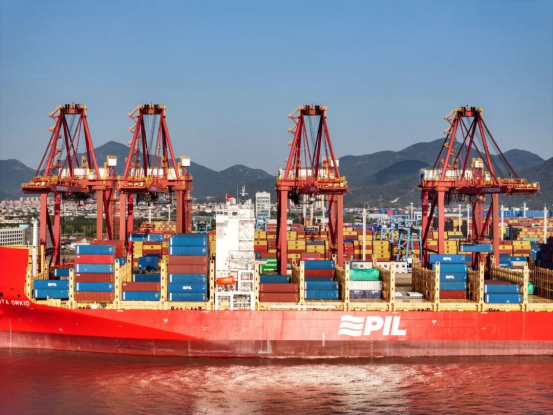
Yu Miaojie: Since the reform and opening-up, China’s outward investment has essentially gone through three stages: going global, integrating in, and moving up. We have achieved considerable success in the “going global” stage. Since 2012, China’s annual outward investment flow has ranked among the top three globally for 13 consecutive years. By the end of 2024, Chinese enterprises had established over 50,000 overseas entities across 190 countries and regions. The stock of outward investment exceeded three trillion US dollars, maintaining a top-three global ranking for eight consecutive years, with its share of global outward investment rising to 7.2%.
“Integrating in” emphasizes people-to-people connectivity. Through the high-quality co-construction of the Belt and Road Initiative, we have expanded cooperation from infrastructure into multiple dimensions including economy and trade, finance, culture, digital technology, and green development. Over three-quarters of the world’s countries and more than 30 international organizations have joined this collaborative effort, fostering mutual understanding and friendship between nations and peoples.
“Moving up” signifies that our opening-up is not an end in itself, nor is it merely for profit. Instead, it aims to leverage outward investment to better serve the domestic market and the real economy, achieving high-quality development for China itself. In this process, it is essential to adhere to the principles of prioritizing our own needs and serving our own interests, thereby enabling our industries and enterprises to ascend to the high end of the global value chain.
First, the institutional Opening-Up should be expanded steadily. During the 15th Five-Year Plan period, we should not only adhere to the global economic order but also strive to become its leaders who shape it. This involves steadily expanding institutional opening-up in areas such as rules, regulations, management, and standards. Key efforts should focus on aligning with high-standard international economic and trade rules, such as the Regional Comprehensive Economic Partnership (RCEP), and prioritizing critical sectors like goods trade, services trade, and the digital economy. Platforms like the Hainan Free Trade Port and various Pilot Free Trade Zones should play a pioneering role in testing and advancing systematic, integrated, and coordinated institutional innovations.
Second, a two-way investment cooperation space should be expanded. The core of international economic cooperation is mutually beneficial and win-win outcomes. In response to current China-U.S. trade frictions, as well as practices like “small yard, high fence” and “decoupling and supply chain disruptions,” it is essential to attract global resources through the domestic economic cycle while also expanding our “circle of friends” to achieve breakthroughs via “win-win openness.” On the one hand, we should cultivate new advantages in attracting foreign investment by shortening the negative list for foreign market access, optimizing the business environment, and leveraging foreign capital to stimulate the domestic market. On the other hand, we must strengthen the management of outward investment, improve comprehensive overseas service systems, promote the integration of trade and investment, and provide robust support for enterprises venturing abroad.
Finally, we should optimize global investment layout based on local conditions. Under the GNI-oriented approach, outward investment is not about blind or excessive investment but emphasizes diversified global asset allocation and industrial layouts, which also helps enhance risk resilience. In terms of investment strategies, I believe a differentiated and tailored approach should be adopted to align investment priorities with local conditions. African and Latin American countries, rich in mineral resources critical to China’s “new trio” (new energy vehicles, lithium batteries, and photovoltaic products), should see increased investment to further strengthen China’s comparative advantages. East African and Southeast Asian countries and regions, suitable for labor-intensive industries, can be encouraged to host processing and manufacturing links transferred by multinational corporations. Investing in EU countries is also viable, primarily relying on a “technology-for-market” approach. Without involving core technologies in transactions, this strategy can drive Chinese enterprises toward disruptive innovation, continuously solidifying their core competitiveness in the global market.
Zhejiang to Leverage the Initiative and Creativity of Its People
Reporter: The “Chinese People Economy” has deep roots in Zhejiang. On November 1, 2006, the then Secretary of the Zhejiang Provincial Party Committee Xi Jinping profoundly explained the concept of the “Zhejiang People Economy” in an article titled Expanding the Zhejiang Economy through the “Zhejiang People Economy. He pointed out that “the ‘Zhejiang Economy’ refers to the total economic output created within Zhejiang by both Zhejiang natives and non-natives, while the ‘Zhejiang People Economy’ encompasses the total economic output created by Zhejiang natives both within and outside the province.” The article emphasized that for Zhejiang to achieve faster and better development from a new starting point, it must both “develop Zhejiang by rooting itself in Zhejiang” and “develop Zhejiang by looking beyond Zhejiang,” ensuring sustained progress from a high baseline. In your view, during the 15th Five-Year Plan period, how can Zhejiang take the lead in exploring the development of the “Chinese People Economy” to achieve major breakthroughs in deeply integrating into and serving the new development paradigm, and in building a high-level open province?
Yu Miaojie: The most significant difference between the “Chinese People Economy” and the “Chinese economy” lies in the inclusion of the word “people,” and this is precisely the distinctive feature and greatest advantage of Zhejiang’s opening-up. As Xi Jinping pointed out, what is the secret to the success of the “Zhejiang People Economy”? One key factor is not only the courage to venture out and start businesses but, more importantly, the spirit of integrity and teamwork. This enables the formation of highly dynamic business groups capable of achieving “big markets for small commodities.” The ability to operate independently while also excelling at collaboration is an outstanding quality of the Zhejiang people and a crucial reason for the formation and growth of the “Zhejiang People Economy.” Moving forward, Zhejiang should continue to focus on its “people,” leveraging the initiative and creativity of its vast array of market entities.
Domestically, there should be a strong promotion of the entrepreneurial spirit in the new era, polishing the “Zhejiang Merchant” brand as a gold standard, and vigorously developing the "Sweet Potato Economy.” The “Sweet Potato Economy” vividly exemplifies “developing Zhejiang by looking beyond Zhejiang.” Just as sweet potato vines extend in all directions to nourish a larger, sturdier tuber, this model thrives on the pioneering spirit of Zhejiang merchants who dare to take the lead and expand their businesses globally. It is recommended that Zhejiang further emancipate its mindset and provide robust support for Zhejiang-born entrepreneurs and enterprises. Creating an environment where private enterprises and the private economy can operate freely as long as it is not prohibited by law will foster fair competition both internally and in outward investment, boosting their confidence to engage in international competition. Especially in advantageous and emerging industries such as new energy, intelligent manufacturing, and the digital economy, private enterprises should be encouraged and guided to “step on the accelerator and speed up,” accelerating their global layout and seizing opportunities in the international market.
In addition, I believe state-owned enterprises can also “go global.” Zhejiang’s state-owned enterprises can further leverage their capabilities in integrating entire industrial chains and their policy resource advantages. They should focus on key sectors, break through technological barriers, and build a self-reliant and secure international supply chain system. At the same time, innovative models such as “state-owned enterprises leading the way,” “borrowing ships to sail the seas,” and “co-building ecosystems” can be adopted to create channels and accumulate experience for a wide range of private enterprises.
Externally, it is essential to adhere to a “people-to-people connectivity”-oriented approach, actively implement national initiatives, and deepen cooperation under the Belt and Road Initiative. As the saying goes, “A just cause enjoys abundant support, while an unjust one finds little.” Zhejiang’s economic development model is not only a path to prosperity and strength for the province but also one that can make significant contributions to the national and even global economy. When engaging in two-way investment cooperation with Belt and Road partner countries, greater emphasis should be placed on balancing economic and social benefits. Major landmark projects and “small yet impactful” livelihood projects should be coordinated and advanced to ensure that local communities share in the benefits of openness. This approach will further broaden Zhejiang’s path of opening-up.
Expert Profile
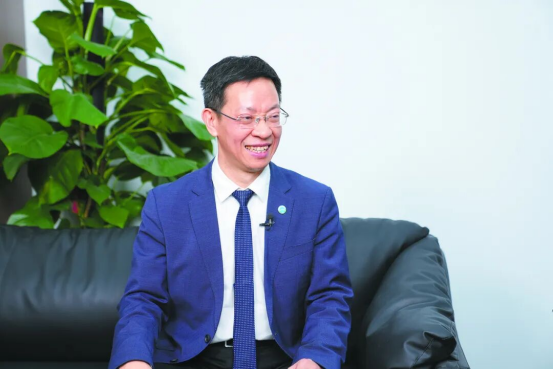
Yu Miaojie is a deputy to the 14th National People’s Congress and a specially invited supervisor for the National Commission of Supervision. He serves as Deputy Party Secretary and President of Liaoning University. He is a fellow of the International Economic Association (IEA) and the first Chinese recipient of the Royal Economic Society Prize. He is also a winner of the National Talent Program under the Ministry of Education, a recipient of the National Science Fund for Distinguished Young Scholars, and a Boyaa Distinguished Professor at Peking University. Additionally, he holds positions including Vice President of the China Society of World Economics, Vice President of the Chinese Association of Quantitative Economics, and Vice President of the China Society of Industrial Economics. His main research areas are International Trade, World Economy, and China’s Economic Development.
Source: Originally published in Zhejiang Daily.