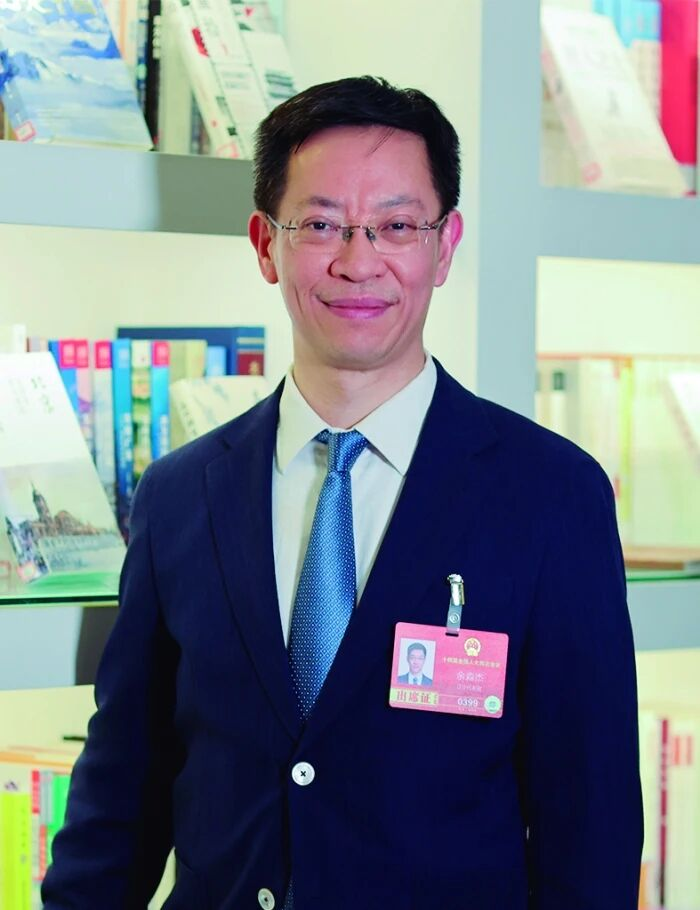
Reducing overall logistics costs across society is an important measure to support the development of the real economy and promote steady growth of the national economy. In a recent interview with a reporter from Shanghai Securities News, Yu Miaojie, Deputy to the National People's Congress and President of Liaoning University, stated that an institutional framework featuring “simultaneous fee reduction and efficiency improvement, as well as balanced burden alleviation and sustainable development” should be formed by improving the toll exit mechanism, implementing structural fee reduction policies, and building a diversified operation model, so as to lower comprehensive logistics costs.
He pointed out that the current revenue structure of expressways is overly reliant on tolls, while the share of non-toll revenue from service area operations and supporting services remains low, and the capacity for sustainable operation needs to be strengthened. Although the market-oriented pricing mechanism for high-speed rail passenger transport has been implemented, differentiated and structured pricing products for different groups and scenarios still need to be improved, and there is room to enhance overall revenue from ticket prices. Meanwhile, logistics enterprises face considerable operational cost pressure, and there is still potential to reduce the comprehensive costs of road and rail freight transport. It is urgent to optimize policies to cut costs and ease burdens.
“On the premise of ensuring the sustainable operation of transport infrastructure, optimizing road and rail pricing mechanisms and reducing comprehensive logistics costs is not only a practical need for stabilizing growth, expanding domestic demand and ensuring employment, but also an important measure to empower the development of the real economy and smooth the domestic circulation”, Yu Miaojie stated.
With regard to the expressway toll mechanism, he suggested promoting the transformation of the expressway operation model and raising the proportion of non-toll revenue on the basis of appropriately optimizing the toll structure. Efforts should be made to build integrated service areas featuring "transportation + commerce +energy + digital services” through the transformation and upgrading of service areas.
“New energy charging and swapping facilities as well as energy storage infrastructure can be improved to foster new growth areas in energy supply services. The digital upgrading of service areas should be promoted to realize integrated settlement of toll, consumption and logistics services. By increasing revenue from commercial, energy and other value-added services, the share of non-toll revenue can be raised to strike a balance between fee reduction and sustainable operation”, Yu Miaojie stated.
He proposed establishing an evaluation and orderly exit mechanism for expressways upon the expiration of toll collection periods. A unified national public ledger of expressway toll projects should be adopted to regularly disclose key information including toll periods, investment recovery and rate of return. For projects that have achieved reasonable returns or reached the end of their toll collection period, provincial transport authorities shall launch special evaluations in accordance with the law. In light of actual operation and regional development needs, toll reductions or phase-outs should be implemented in categories and stages for urban or intercity sections. Regarding the market-oriented pricing mechanism for high-speed rail, He suggested enriching differentiated and structured pricing products to accurately reduce travel costs and improve overall pricing efficiency. For core cities with high commuting demand such as capitals, municipalities directly under the central government and provincial capitals as well as their surrounding areas, monthly and quarterly commuter passes could be introduced for intercity and short-distance high-speed rail services, with tiered discounts based on single-ticket prices to lower long-term commuting costs.
In terms of highway-rail intermodal transport, he suggested exploring differentiated rates for logistics corridors in key regions and formulating exclusive freight preferential policies for industrial clusters and urban-rural integration demonstration zones. Rate leverage should be used to guide traffic distribution, improve trunk transport efficiency and reduce regional comprehensive logistics costs.
“Overall, targeted policies should be adopted to avoid operational pressure caused by across-the-board fee cuts, enhance the relevance and effectiveness of policies, and achieve a win-win goal between the sound operation of transport infrastructure and cost reduction and efficiency enhancement for the real economy”, Yu Miaojie emphasized.