Recently, Yu Miaojie, President of Liaoning University, was invited to attend the academic symposium on the 15th Five-Year Plan and the Construction of an Independent Knowledge System for Philosophy and Social Sciences with Chinese Characteristics. At the symposium, Yu Miaojie put forward that accelerating the construction of an independent knowledge system for Chinese economics requires understanding from two dimensions:
First, it is necessary to analyze the background and necessity of constructing an independent knowledge system for Chinese economics, that is, to answer the key question of why contemporary Western economics fails to adequately explain China’s economic development. Yu Miaojie holds that Western economics cannot identify the root causes of China’s economic development, nor can it explain why China has long achieved the combination of an efficient market and a proactive government.
Second, it is essential to explore the challenges and tasks faced by the construction of the independent knowledge system. Yu Miaojie analyzed the challenges in building an independent knowledge system for Chinese economics from the perspectives of research and teaching, and put forward feasible paths. He pointed out that previous studies mostly focused on the field of production, while the analysis of the distribution field was relatively limited. To accelerate the construction of an independent knowledge system for Chinese economics, research should be shifted to the socialist market economy with Chinese characteristics that embodies the essential attributes of socialism. In particular, with regard to the concept of “socialism”, research should be transformed from aggregate analysis to distribution research, from “making the cake bigger” to “dividing the cake fairly”, and from material-oriented analysis to people-oriented exploration. In this way, the socialist values of people-centeredness and the pursuit of common prosperity can be highlighted.
The highlights of the conference are reprinted as follows:
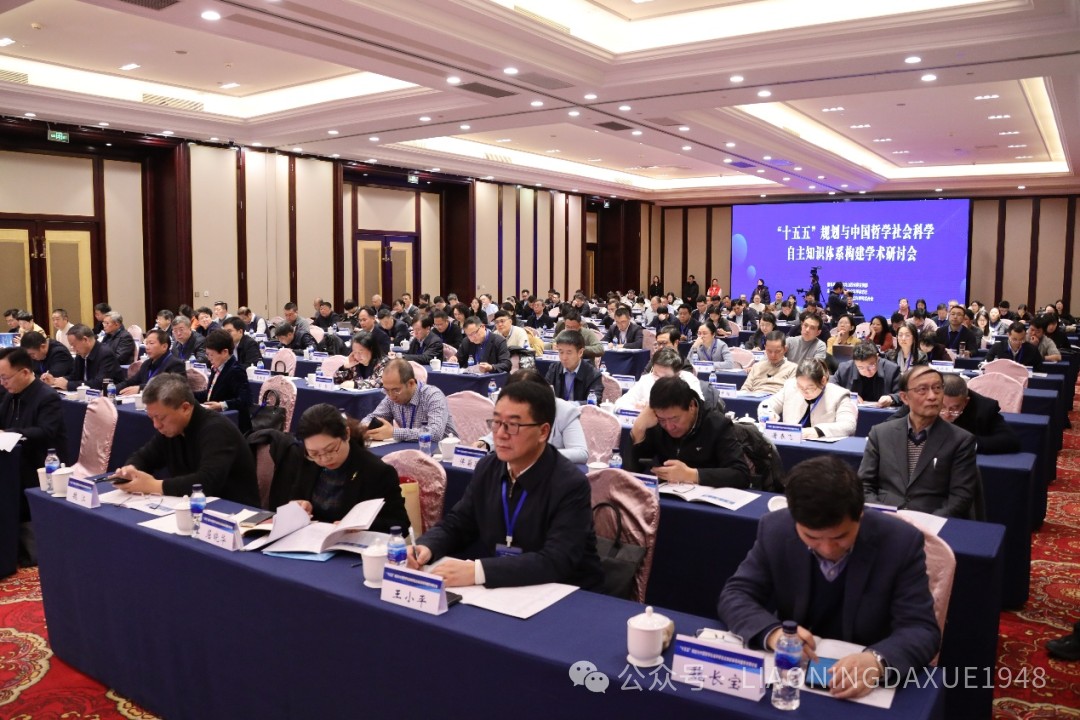
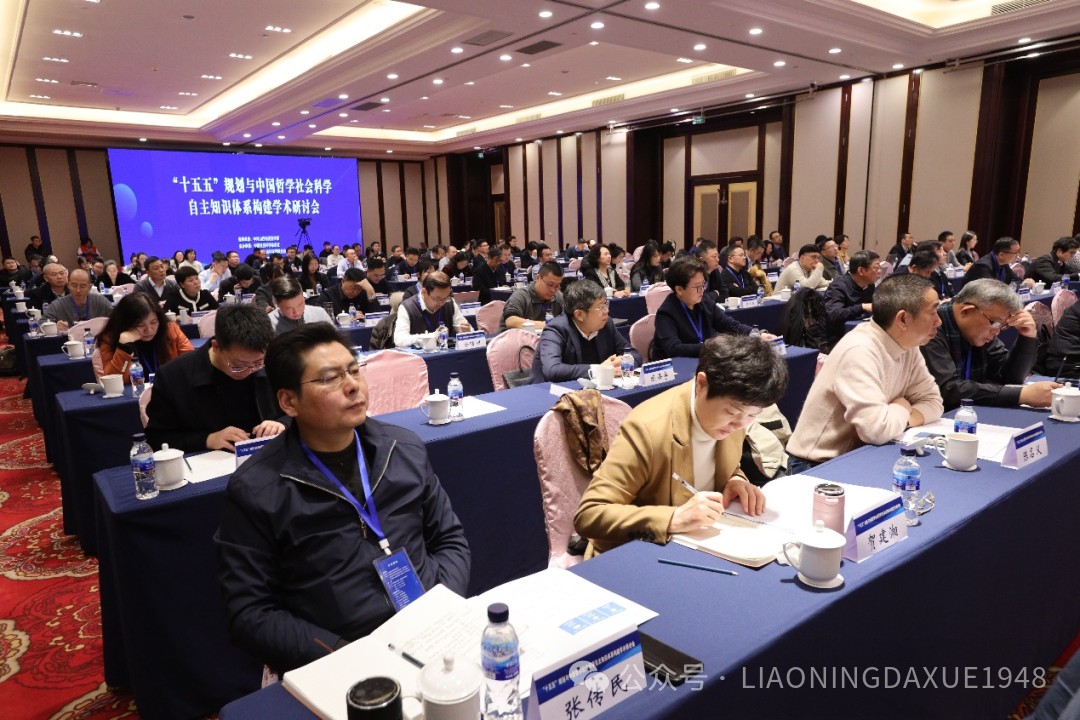
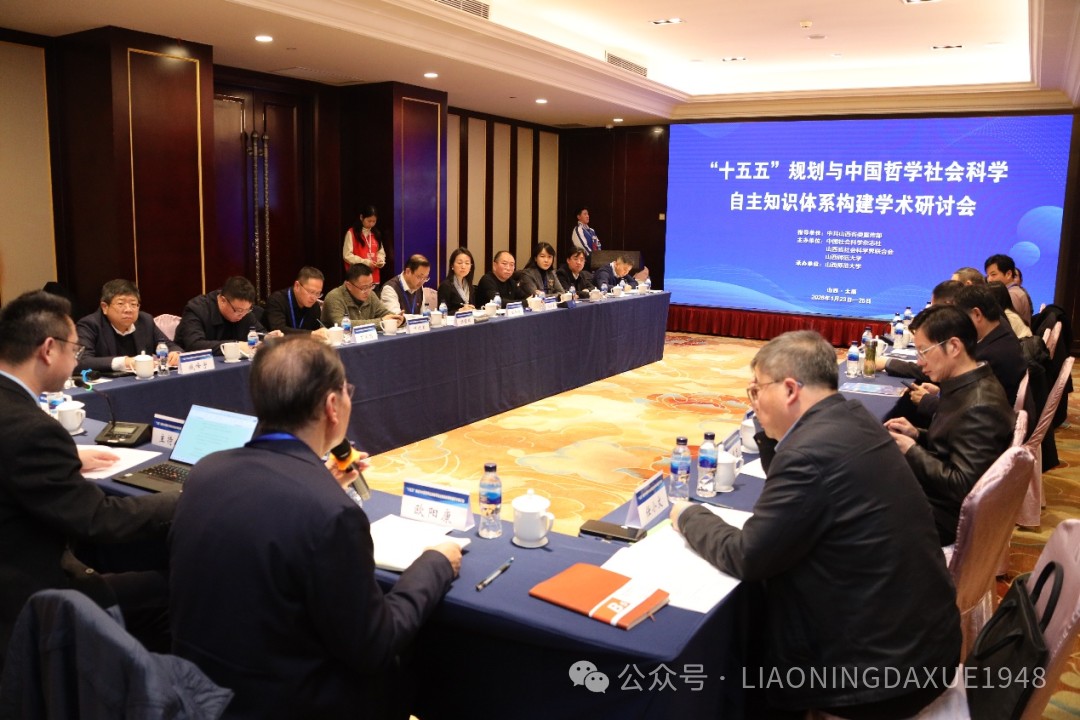
China Social Sciences Network (Reporter Chen Yajing) The proposals for the 15th Five-Year Plan clearly state: “Innovate and implement the Project to Study and Develop Marxist Theory, and accelerate the construction of an independent knowledge system for philosophy and social sciences with Chinese characteristics.” This deployment provides important guidance and leadership for accelerating the development of philosophy and social sciences with Chinese characteristics. To mark the 10th anniversary of General Secretary Xi Jinping’s speech at the Symposium on the Work of Philosophy and Social Sciences, the Academic Symposium on the 15th Five-Year Plan and the Construction of an Independent Knowledge System for Philosophy and Social Sciences with Chinese Characteristics was held in Taiyuan, Shanxi Province on January 24. Co-hosted by the Journal of Chinese Social Sciences, the Shanxi Federation of Social Sciences Circles, and Shanxi Normal University, the symposium brought together experts and scholars from federations of social sciences circles across provinces, autonomous regions, and municipalities directly under the Central Government, as well as universities and research institutions nationwide. They focused on the major task of building an independent knowledge system for philosophy and social sciences with Chinese characteristics, committed to promoting the rooting of China’s social science theories in native soil, highlighting their unique value worldwide, and contributing wisdom and strength to the prosperity and development of China’s philosophy and social sciences.
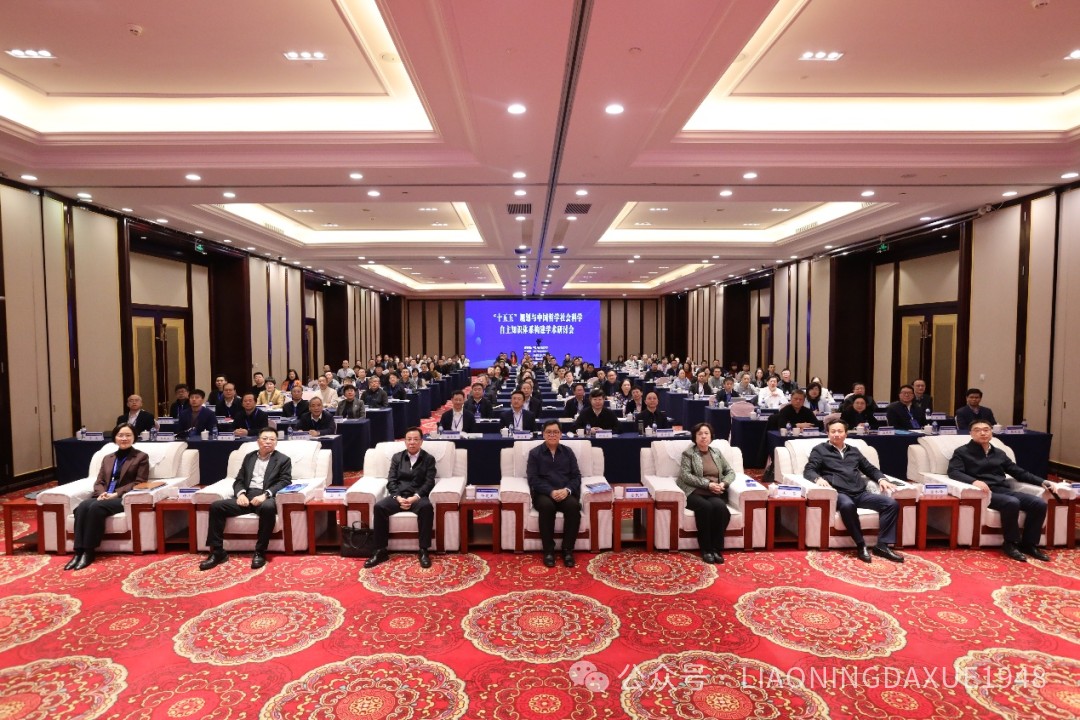
Jin Minqing, Member of the Party Leadership Group of the Chinese Academy of Social Sciences (CASS), Director and Secretary of the Party Leadership Group of the Institute of Contemporary China Studies, and Secretary of the Party Committee and Editor-in-Chief of the Journal of Chinese Social Sciences; Wang Lei, Member of the Party Leadership Group and Vice Chairman of the Shanxi Provincial Committee of the Chinese People’s Political Consultative Conference (CPPCC); and Yang Jianjun, Deputy Director of the Publicity Department of the CPC Shanxi Provincial Committee and Director of the Information Office of the People’s Government of Shanxi Province, attended the opening ceremony and delivered speeches. The opening ceremony was presided over by Zhai Guoqiang, Deputy Secretary of the Party Committee and Deputy Editor-in-Chief of the Journal of Chinese Social Sciences.
Jin Minqing pointed out that building an independent knowledge system for philosophy and social sciences with Chinese characteristics is not only a glorious mission entrusted to the philosophical and social science community by the Party and the country, but also an important criterion for testing the development of China’s philosophical and social science cause. For a long time, Western centralism has dominated international knowledge production and academic discourse systems, leading to the simple application of Western theories to interpret China’s practices in some fields, which often “acclimatizes poorly” and fails to truly understand China’s development miracle, nor can it respond to the unique value and global significance of Chinese-style modernization. To build an independent knowledge system for philosophy and social sciences with Chinese characteristics, it is necessary to uphold subjectivity and originality, deepen the “two integrations”, and strengthen academic leadership. Academic journals should also take a clear political stance, lead academic directions, promote innovation in concepts and methods, facilitate interdisciplinary integration, enhance international influence, and provide strong support for the construction of an independent knowledge system for philosophy and social sciences with Chinese characteristics.
Wang Lei stated that holding this symposium in the first year of the 15th Five-Year Plan period and on the 10th anniversary of General Secretary Xi Jinping’s “May 17” important speech is an important measure to thoroughly study and implement the spirit of the Fourth Plenary Session of the 20th CPC Central Committee and solidly advance the new journey of Chinese-style modernization. It is also an exploratory practice to consciously take Xi Jinping Thought on Culture as the guide, study and implement the spirit of the National Conference on Publicity Directors, and strive to transform academic advantages into practical effectiveness in serving the overall development of the 15th Five-Year Plan. Shanxi has a long history and profound cultural heritage, making unique contributions to the inheritance and development of Chinese civilization and providing rich nourishment for philosophical and social science research.
Yang Jianjun said that the social science community in Shanxi should thoroughly study and implement Xi Jinping Thought on Culture, base itself on the province’s rich historical, cultural and red cultural resources, cultivate distinctive disciplines, form research clusters, and continuously launch high-level academic achievements. This will provide theoretical support for inheriting the cultural context of Sanjin, serving high-quality development, and contribute to the prosperity and development of philosophy and social sciences and the acceleration of the construction of an independent knowledge system for philosophy and social sciences with Chinese characteristics.
Clarifying the Scientific Nature of the Independent Knowledge System
The assertion that “to accelerate the development of philosophy and social sciences with Chinese characteristics is, in the final analysis, to construct an independent knowledge system with Chinese characteristics” precisely points out the core of system construction— “independence” is the soul, and “knowledge system” is the carrier. The two are closely linked and mutually reinforcing, together forming a solid foundation for promoting academic progress and cultural prosperity in China. Cai Lidong, Executive Vice President of Jilin University, proposed that philosophy and social sciences with Chinese characteristics should demonstrate inheritance and nationality, possess originality and contemporaneity, and be systematic and professional at the same time. Adhering to the guiding position of Marxism in the field of philosophy and social sciences in China, summarizing China’s experience with Chinese principles, and elevating China’s experience into Chinese theories is the only way to build an independent knowledge system with Chinese characteristics.
“Constructing an independent knowledge system is the key to telling China’s stories well in the new era,” said Lin Jianhua, Secretary of the Party Committee of the Institute of Chinese-Style Modernization Studies at CASS. Rooted in the practice of Chinese-style modernization, the independent knowledge system profoundly embodies the essential characteristics of scientific socialism, extensively absorbs the outstanding achievements of human civilization, and accurately anchors the direction of civilized development. The construction of this knowledge system is not only a scientific summary and precise refinement of the laws of modernization development, but also the core and essence of the theoretical system of Chinese-style modernization.
Subjectivity and originality are the fundamental marks that distinguish China’s independent knowledge system from Western knowledge systems. De-Westernization is not equivalent to autonomization, nor is closure equivalent to localization. Yu Miaojie, President of Liaoning University, cited examples in the field of economics: China has achieved remarkable economic successes, such as a GDP of 140 trillion yuan and the complete lifting of 57 million people out of poverty within six years. These new practices and achievements not only go beyond the explanatory scope of traditional Western economic theories, but also cannot be simply applied to the development models of other countries. In interpreting the socialist market economy with Chinese characteristics, we must not only clarify its essential attribute as a market economy, but also profoundly demonstrate its uniqueness. This uniqueness is reflected in the organic combination of the advantages of the socialist system and the vitality of the market economy, blazing a development path that conforms to China’s national conditions and has distinct Chinese characteristics.
The scientific connotation of building an independent knowledge system for philosophy and social sciences with Chinese characteristics is not a total negation of external theories, but a systematic knowledge construction guided by Marxism, based on China’s practices, integrating diverse resources, and combining originality and universality. Lv Xinbin, Secretary of the Party Leadership Group and President of the Hebei Academy of Social Sciences, put forward the concept of “new quality productivity in social sciences”, emphasizing innovation as the leading force to promote the leap of philosophy and social sciences from a “plateau”to a “peak”. It is committed to breaking the traditional model of imitation and interpretation and shifting to the active construction of an academic system with Chinese characteristics and style.
Consolidating the Cultural Roots of the Independent Knowledge System
The construction of any knowledge system cannot be separated from the nourishment of its cultural soil. The profound confidence underlying the independent knowledge system for China’s philosophy and social sciences stems from the accumulation and inheritance of fine traditional Chinese culture over thousands of years. A knowledge system divorced from its cultural roots is like water without a source and a tree without roots; it can hardly develop distinctive features, let alone sustain long-term vitality.
Fine traditional Chinese culture provides core ideological resources and thinking paradigms for the construction of the system. Concepts such as “the people being the foundation of the state,” “universal harmony,” and “harmony without uniformity” offer the independent knowledge system a value core distinct from that of the West. For instance, the people-centered thought nourishes the theoretical interpretation of common prosperity, while the idea of harmony without uniformity underpins the academic construction of a community with a shared future for mankind. Yin Jie, Secretary of the Party Committee of Shanxi Normal University, noted that the profound heritage accumulated by five thousand years of Chinese civilization, together with the magnificent practice of the Communist Party of China over a century of struggle, jointly forms the foundation for our theoretical innovation and practical exploration. We must adhere to the integration of the basic tenets of Marxism with China’s specific realities and fine traditional Chinese culture, promote the creative transformation and innovative development of fine traditional Chinese culture to inject new vitality, and integrate it into the pulse of the times.
“The importance of promoting the creative transformation and innovative development of fine traditional Chinese culture has become a consensus in the academic community. The difficulty and focus lie in how to deeply explore the ideological concepts, humanistic spirits, moral norms and other elements contained in fine traditional Chinese culture, so as to apply the knowledge, wisdom and rational speculation accumulated by the Chinese nation over thousands of years to addressing the issues of the times.” Wang Xuhui, President of Dongbei University of Finance and Economics, observed that numerous great ancient Chinese works embody rich management thoughts. The core ideas of Confucian benevolence and righteousness, Taoist inaction, Legalist rule of law, and military strategies from the Military School, among others, provide an important basis for sorting out Chinese management wisdom.
Fine traditional Chinese culture is not a rigid historical legacy, but vivid materials that can be transformed into an independent knowledge system through academic innovation. Academy culture is a vivid representation of fine traditional Chinese culture. Zhu Xiaoli, Secretary of the Party Committee of Jiangxi Normal University, stated that academy culture boasts a long history. As an important carrier of ancient Chinese education, it also serves as a spiritual highland of Chinese culture. In the practice of civilization in the new era, academy culture, though spanning time and space, is deeply compatible and mutually reinforcing in its spiritual core and functional goals. Its integration is guided by Marxism and takes the “two integrations” as the fundamental approach. It activates the philosophical genes of fine traditional Chinese culture at its root, realizes the modern transformation of traditional philosophical wisdom, and consolidates the cultural foundation for the independent knowledge system of China’s philosophy and social sciences.
Whether embodied in the Chinese cultural thoughts contained in disciplinary systems or in the vivid presentation of local characteristic cultures, they should all be deeply rooted in the foundation of fine Chinese culture and based on the grand vision of the “two integrations.” Tu Chunfei, Member of the Party Leadership Group and Vice Chairman of the Zhejiang Federation of Social Sciences Circles, held that the cultural foundation for constructing the independent knowledge system lies in upholding the subjectivity of Chinese culture and rejecting the simplistic application of Western disciplinary classifications and theoretical paradigms. The problem awareness, value core and discourse logic of knowledge production should be deeply rooted in the spiritual world, historical experience and contemporary practice of the Chinese nation.
Exploring the Practical Paths for Building an Independent Knowledge System during the 15th Five-Year Plan Period
Building an independent knowledge system is by no means an overnight academic project, but an all-round transformation involving research ecology, talent cultivation, and discourse communication. Lei Chengfeng, Secretary of the Party Leadership Group and Executive Vice Chairman of the Shanxi Provincial Federation of Social Sciences, stated that the 15th Five-Year Plan period is a crucial five years for comprehensively building a great modern socialist country, and also a critical period for constructing an independent knowledge system of philosophy and social sciences with Chinese characteristics. We must always adhere to the guidance of Marxism and integrate Xi Jinping Thought on Socialism with Chinese Characteristics for a New Era into the entire process of knowledge system construction to ensure that the construction work does not deviate from the correct course or go astray.
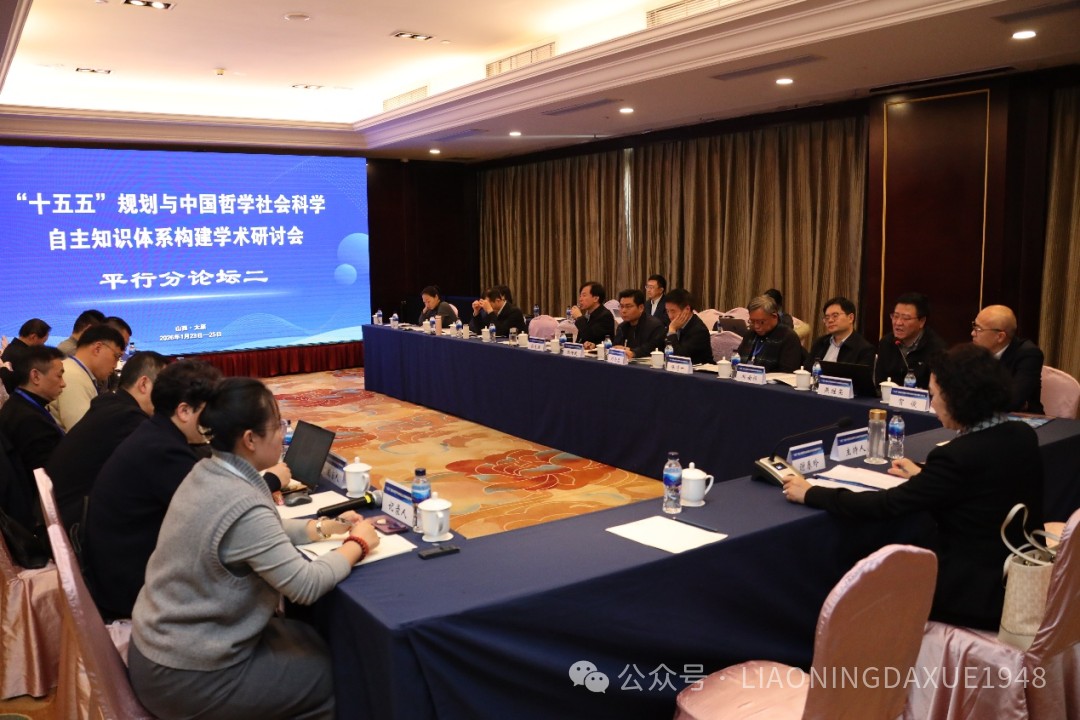
Wu Enqi, Secretary of the Party Leadership Group and Executive Vice Chairman of the Inner Mongolia Autonomous Region Federation of Social Sciences, pointed out that at present, the construction of an independent knowledge system of philosophy and social sciences with Chinese characteristics has achieved initial results: academic platforms are becoming increasingly complete, the capacity for localized interpretation has been enhanced, and the disciplinary system has gradually got rid of Western path dependence. However, problems such as insufficient innovation, disconnection between theory and practice, and the absence of evaluation and incentives have not been completely solved. Social science workers need to step out of their studies, take technological integration, barrier-breaking, and precise incentives as support, combine local practices, develop knowledge with local characteristics, demonstrate value through practical achievements, and consolidate the confidence of Chinese discourse.
“The Chinese community of philosophy and social sciences is undergoing a profound transformation, and its cutting-edge research directions are shifting, that is, accelerating the construction of an independent knowledge system.” In the view of Yu Jianxing, Secretary of the Party Committee of Zhejiang Gongshang University, by discovering and portraying key words of the real China and refining them into new concepts, we can promote the innovation of basic theories of social sciences and further achieve the long-term goal of constructing an independent knowledge system.
From the establishment of Zhongyuan Studies with distinctive Henan characteristics, to the vigorous vitality of Dunhuang Studies, Bamboo Slips Studies, Xixia Studies, Tibetan Studies and other rare and unique disciplines in the new era; from the careful layout of interdisciplinary fields such as Borderland Studies and Kunlun Studies, to the continuous deepening of research on key cultural heritages such as Sanxingdui, Jinsha San Shu, and the Shu Roads...
All these achievements demonstrate the solid steps taken in the construction of China’s independent knowledge system. Representatives of provincial federations of social sciences at the meeting, combining practical experience from various provinces, explored the frontiers of China’s independent knowledge system and systematically summarized the breakthrough progress in theoretical armament and the construction of the three major systems (disciplinary system, academic system, and discourse system). Scholars unanimously stated that building an independent knowledge system is the key to breaking the monopoly of Western academic discourse, and also the academic foundation for interpreting China’s practices and contributing Oriental wisdom to the world, which is also the core proposition for the development of philosophy and social sciences in the new era. In the future, we will adhere to Xi Jinping Thought on Socialism with Chinese Characteristics for a New Era as the fundamental guideline, integrate Xi Jinping Thought on Culture throughout the process, deepen the research and interpretation of the Party’s innovative theories, and at the same time, based on Chinese-style modernization, take problems as the orientation to solve major theoretical and practical issues in development.
“The process of accelerating the construction of an independent knowledge system of philosophy and social sciences is also a process for the Chinese community of philosophy and social sciences to explore new research organization models and form unique research organization capabilities. Organized research and organized communication will inevitably be the most important advantages of research organization and communication characteristics of Chinese philosophy and social sciences.” He Jun, Deputy Editor-in-Chief of the Journal of Chinese Social Sciences, concluded at the closing of the conference that this seminar is also an important exploration for the philosophy and social sciences community to unite and carry out organized research and organized communication.