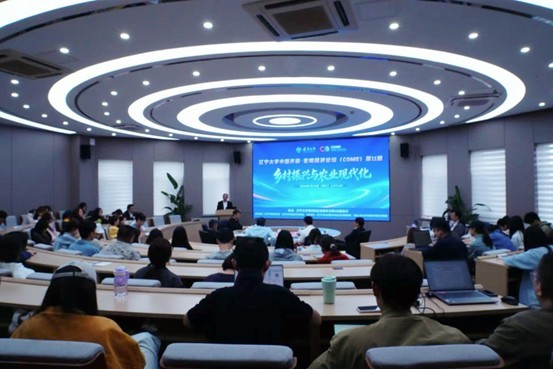
On the morning of May 23, 2026, the 11th Session of the China Open Macroeconomic Forum (COME) was successfully held at the Puhe Campus of Liaoning University (LNU). The forum, themed “Rural Revitalization and Agricultural Modernization”, was convened to thoroughly implement the key tasks set out in the 2026 Central Document No. 1, which aims to anchor agricultural modernization and solidly advance comprehensive rural revitalization, as well as to systematically promote China’s agricultural powerhouse strategy. During the forum, participants engaged in in-depth discussions centered on theoretical innovation, future planning, and practical pathways for agricultural modernization, contributing to the advancement of comprehensive rural revitalization and the building of China’s agricultural power. The forum was chaired by Professor Qiu Huanguang, Member of the Standing Committee of the CPC LNU Committee and Vice President of the university.
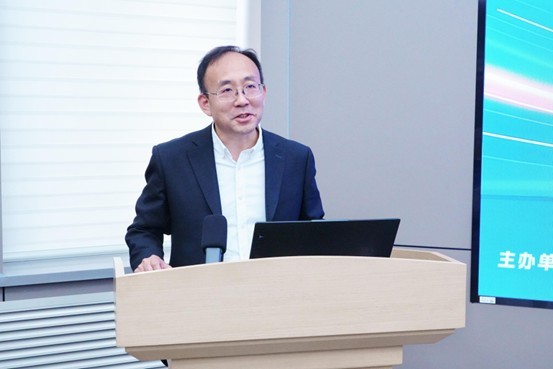
In his address, Professor Yu Miaojie, President of LNU, pointed out that 2026 marks the first year of the 15th Five-Year Plan period and a crucial moment for fully embarking on the 2035 long-range goals, advancing the building of China into an agricultural powerhouse, and promoting comprehensive rural revitalization. Agricultural and rural modernization is an indispensable cornerstone of Chinese-style modernization and a key lever for promoting high-quality development, fostering coordinated regional development, and achieving common prosperity in the new era. He emphasized that at this historical intersection, where the global economic landscape is being profoundly reshaped and China’s domestic development is entering a critical stage of structural transformation and shift in growth drivers, in-depth discussions on the internal logic, contemporary implications, and practical pathways of rural revitalization and agricultural modernization hold profound theoretical value, distinct practical significance, and long-term strategic importance.
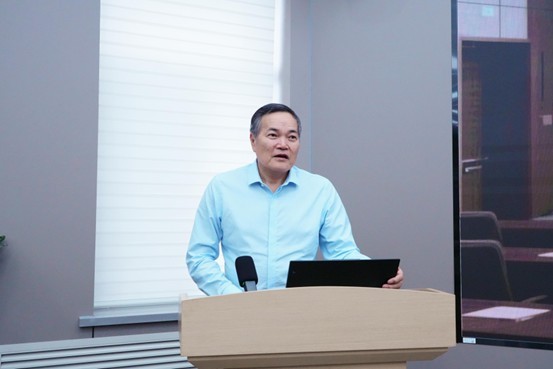
During the forum’s keynote speech session, Qian Keming, a member of the Standing Committee of the 14th National Committee of the Chinese People’s Political Consultative Conference (CPPCC), Vice Chairperson of the Committee on Cultural, Educational, Health and Sports Affairs, and former Vice Minister of Commerce, delivered a report titled China’s Agricultural Opening-Up: Historical Experience, Realistic Challenges and Future Strategy. Framed within the long-term perspective from 2001 to 2050, he traced the development trajectory of China’s agricultural opening-up. He noted that over the 25 years since China’s accession to the WTO, the country’s agricultural sector has undergone a transformative leap. Its market opening has approached the levels of Europe and the United States, and China has transitioned from a net exporter to a net importer of agricultural products, accompanied by profound shifts in employment structure. He summarized the model of coordinated governance between agriculture and the secondary and tertiary industries, relying on a gradual and categorized opening-up approach, pro-agricultural policy adjustments, and institutional reforms to revitalize production factors in support of agricultural development. Addressing the core challenge of protecting smallholder farmers in a major agricultural country while withstanding external shocks, he proposed a three-tier operational mechanism: unleashing comparative advantages, restructuring factors of production, and adapting institutions. He also outlined a development strategy for agricultural opening-up over the next 25 years. He stressed the need to place agricultural opening-up within the overall framework of Chinese-style modernization and high-standard opening-up, and to build a strategic transformation framework that integrates “reform, development, and governance.” To this end, he advocated implementing seven strategic pathways, including variety‑specific openings, industrial chain‑based development, multi-regional deployment, and institutional opening-up, so as to drive three major leaps in agricultural development capacity, strengthen the foundations for building China into an agricultural powerhouse, and enhance agricultural security and the capacity for global resource allocation.
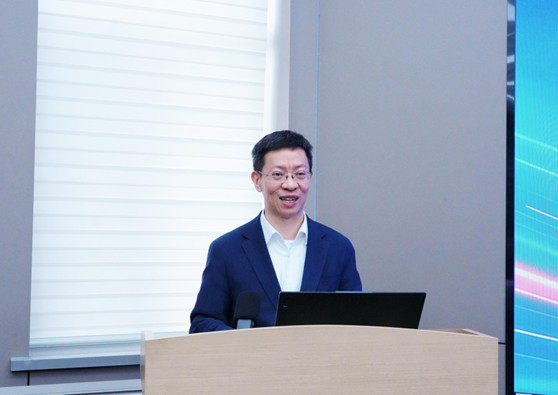
Fellow of the Royal Economic Society (RES Fellow), Fellow of the International Economic Association (IEA Fellow), and President of LNU, Yu Miaojie delivered a speech titled “Understanding Agriculture, Rural Areas and Farmers within the New Development Philosophy”. Using detailed data, he pointed out that during the 14th Five-Year Plan period, China made significant progress in grain output, rural construction, and farmers’ incomes, yet the urban-rural income ratio, though narrowed, remains the biggest shortfall in unbalanced development. Facing challenges such as the increasing complexity of international geopolitics, intensified Sino-US economic and trade frictions, and the difficulty of raising grain output coupled with its vulnerability to decline, he systematically elaborated on the bottlenecks and solutions for the work concerning agriculture, rural areas and farmers from the perspective of the five new development concepts. In terms of innovation, he argued that it is necessary to achieve technological breakthroughs, make innovative allocation of production factors, and deeply transform and upgrade industries so as to develop new quality productive forces in agriculture, realize full-chain technological breakthroughs covering the entire process from cultivation, management, harvest, transport to storage, and accelerate the construction of high-standard farmland. In terms of green development, solid progress should be made in improving rural living environments and in developing green trade. In terms of coordination, the core of rural revitalization is differentiated development, with county economies serving as a key lever. In terms of shared prosperity, national subsidies should provide a safety net while enhancing the endogenous capacity for income generation, so as to “raise the low, expand the middle, and adjust the high” incomes. In terms of opening up, it is necessary to diversify sources of agricultural imports, develop trade in services, deepen cooperation under the Belt and Road Initiative and the RCEP, and actively participate in the formulation of rules and standards.
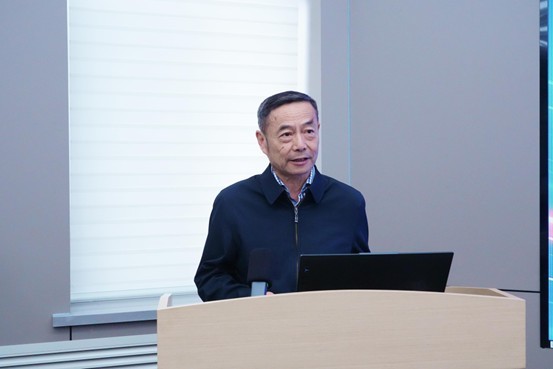
Ren Yongchang, a member of the first batch of Senior Economists of Sichuan Province, a member of the Decision Advisory Committee of the Sichuan Provincial Committee of the CPC and the Sichuan Provincial Government, and former Director of the Sichuan Provincial Department of Agriculture and Rural Affairs, delivered a speech titled “Problems and Countermeasures in the Second Round of Land Contract Extension” based on his frontline experience. He pointed out that there are nine major shortcomings in this work, the core of which are lagging policy research, insufficient inter-departmental coordination and funding guarantee; at the same time, there are many unresolved issues concerning land rights confirmation, incomplete archival data, conflicts over fair land distribution caused by demographic changes, rigid land allocation mechanisms, and inadequate protection of the rights and interests of special groups. In addition, the lack of unified standards for defining membership in collective economic organizations, blurred boundaries of land status, non‑standard implementation procedures at the grassroots level, and weak grassroots work capacity also hinder the progress of the contract extension. To address these problems, he proposed six solutions: adhere to the principle of “overall stability with minor adjustments” and promote the extension work according to local conditions; use technical means such as GPS and create “one file per household” to resolve historical issues; accurately handle demographic changes and the rights of special groups to prevent situations where people gain or lose rights both in rural and urban areas, preserve the contracting rights of migrant workers who have moved to cities while encouraging them to voluntarily transfer their rights for compensation, and support landless or land‑poor households in difficulty through non‑land measures such as collective economic income, profit‑sharing dividends, and public welfare jobs; strictly regulate the extension procedures; strengthen inter-departmental coordination and grassroots capacity, and establish a one‑stop service and dispute resolution mechanism.
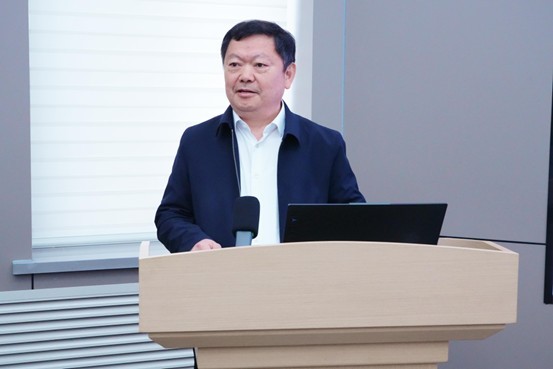
Tang Yuanjie, former Party Secretary and President of the Farmers’ Daily and founder of the China Rural Revitalization Research Institute at Renmin University of China, delivered a speech titled “The Connotation Logic and Practical Approach of Chinese-style Agricultural and Rural Modernization”. He pointed out that agricultural and rural modernization is not only the foundational support for modernization but also an important guarantee for social stability. The profound connotation of Chinese-style agricultural and rural modernization lies in the organic unity of three dimensions: agricultural modernization (modernization of “things”), rural modernization (modernization of the “environment”), and farmer modernization (modernization of “people”). China’s agricultural and rural modernization must not only share the five common characteristics of agricultural modernization in advanced countries—strong supply guarantee, strong scientific and technological equipment, strong management system, strong industrial resilience, and strong competitiveness—but also be grounded in China’s specific conditions, such as a large population with limited arable land, a smallholder economy amid a vast agricultural landscape, rigid resource and environmental constraints, five thousand years of farming civilization, and the essential requirement of common prosperity. In terms of practical pathways, a classified and gradual approach must be followed: the eastern coastal pilot zones should take the lead in basically achieving modernization; the major grain-producing areas in northeast and central China should act as a “ballast stone” for food security; the western regions with characteristic agriculture should pursue distinctive and differentiated development paths; and key ecological protection areas should develop eco-agriculture, carbon sink agriculture, and eco-tourism, achieving a win-win situation between protection and development.
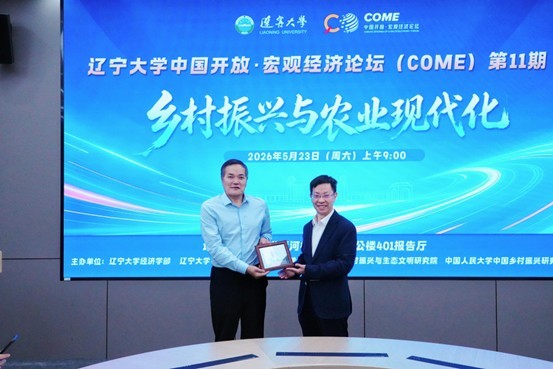
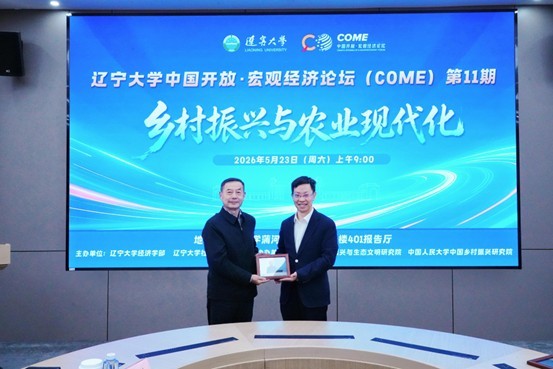
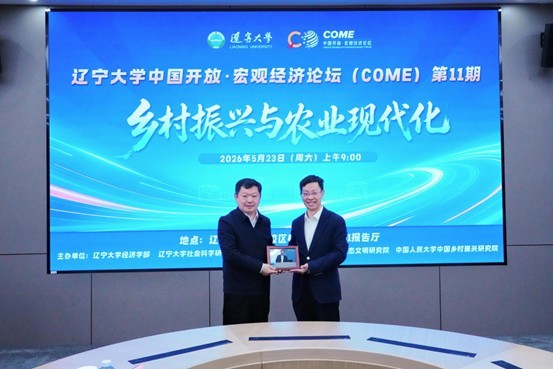
At the conclusion of the forum, President Yu Miaojie presented commemorative photos to the guest speakers and had a group photo taken.
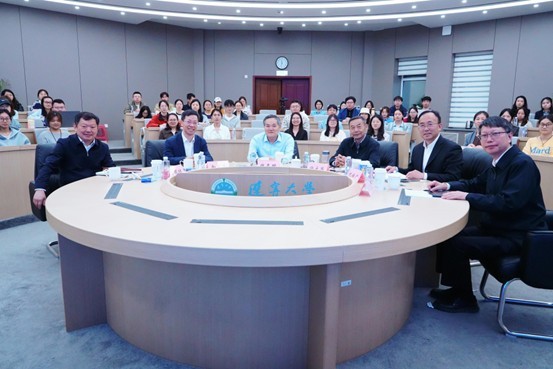
This forum was hosted by the Social Science Research Administration and the Division of Economics of LNU, and co-organized by the Institute for Rural Revitalization and Ecological Civilization of LNU and the China Rural Revitalization Research Institute at Renmin University of China. More than 80 participants, including principal leaders of the units under the Division of Economics as well as representatives of faculty and students, attended the forum.