The 17th Annual Meeting of the New Champions (Summer Davos Forum) of the World Economic Forum opened at the Dalian International Conference Center on June 23. Yu Miaojie, President of Liaoning University (LNU), was invited to attend the sub-forum themed “Less Talk, More Deals” and take part in relevant exchanges and discussions concerning the reform of the global trade governance system and the development of regional cooperation. This session was hosted by Ravi Velloor, Senior Columnist of Singapore’s The Straits Times, and other guests joining the dialogue included Kody Blois, Parliamentary Secretary to the Prime Minister of Canada, Kristen Hopewell, Professor at the School of Public Policy of the University of British Columbia in Canada, Ana Fernanda Maiguashca, President of the Colombian Private Sector Competitiveness Council, and Mark-Alexandre Doumba, Minister of Digital Economy, Digitization and Innovation of Gabon.
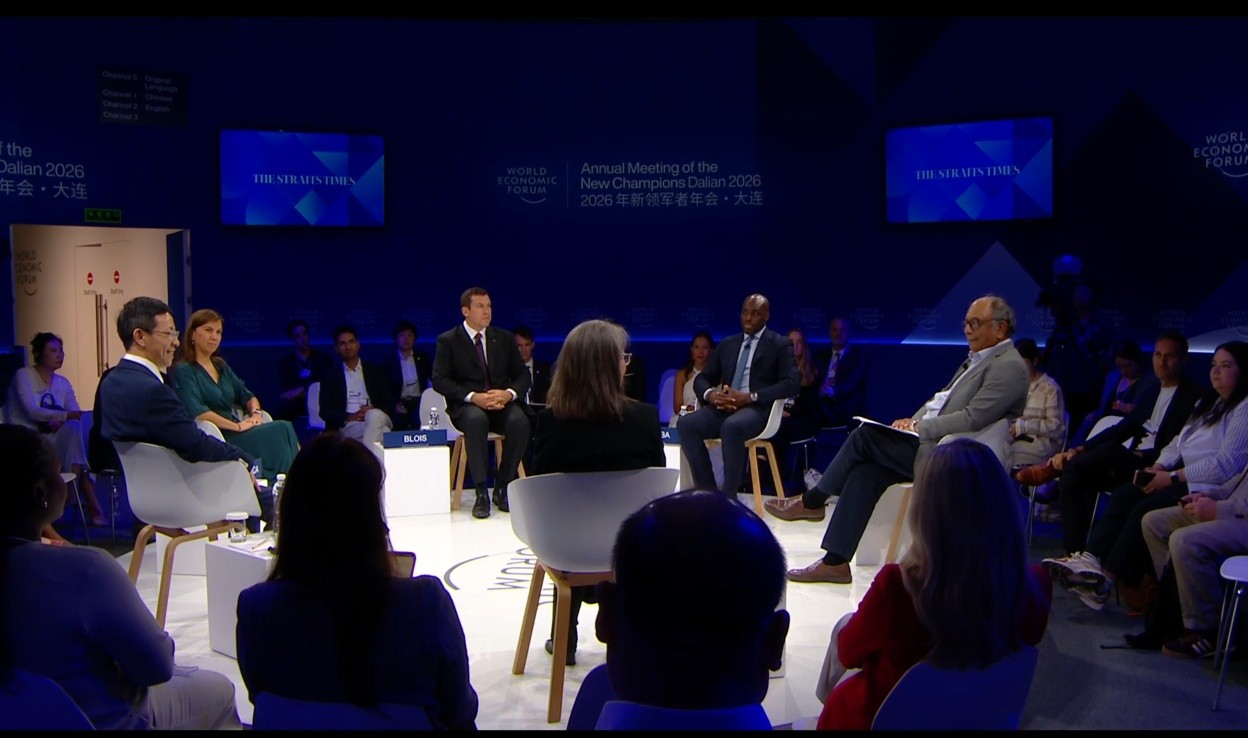
During the discussion, drawing on international trade theories and global economic and trade realities, Yu Miaojie shared his insights on the reshaping of the global trade landscape, development of regional trade agreements, the Belt and Road Initiative, and corporate international layout. He noted that regional trade agreements are growing increasingly important, and the global trading system is evolving into clusters of regional cooperation represented by the USMCA, RCEP and the European Union. Amid mounting challenges facing multilateral trade governance worldwide, regional trade agreements have emerged as a key platform for advancing international economic and trade cooperation. In the long run, various regional cooperation mechanisms will not operate in isolation. Instead, they will pursue connectivity through diversified approaches, injecting fresh momentum into the improvement of the global trading system.
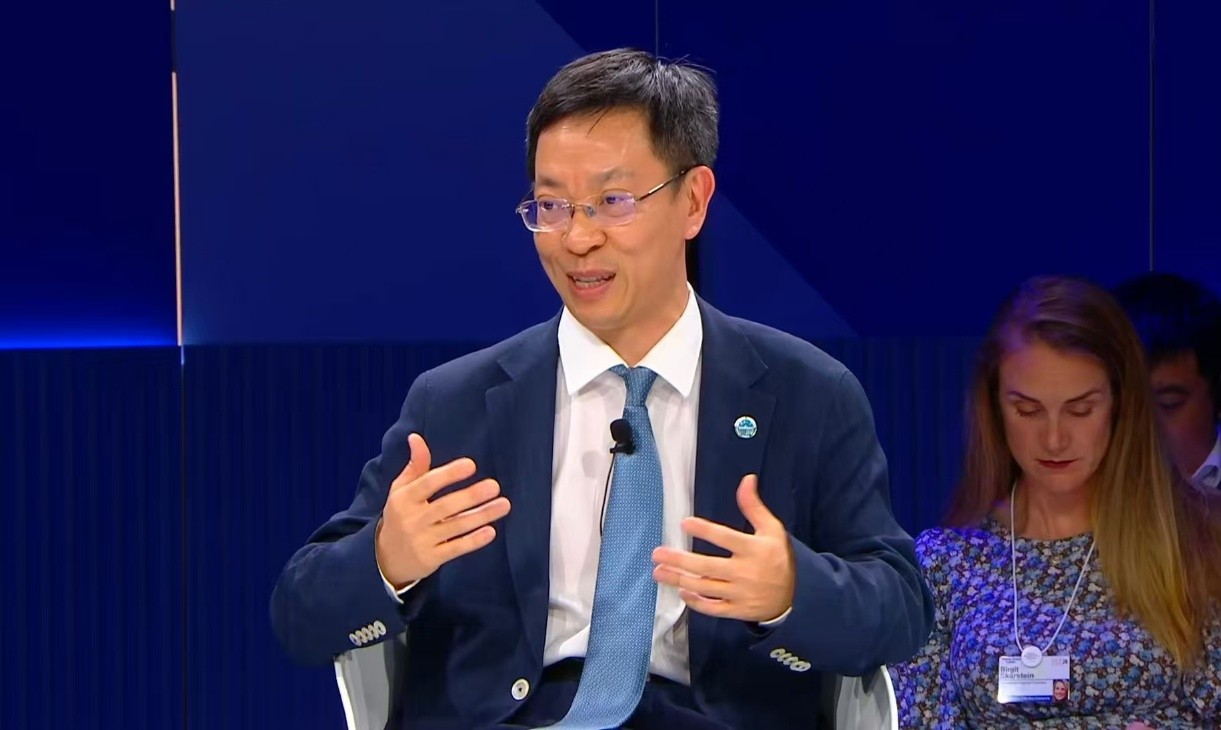
When talking about the Belt and Road Initiative, Yu Miaojie stated that the development of maritime and overland corridors is vital to deepening international economic and trade cooperation. Cities including Dalian enjoy unique geographical strengths in linking northern trade routes and expanding opening-up channels. Meanwhile, China should further strengthen economic and trade ties with ASEAN nations such as Indonesia and Singapore to continuously advance high-quality development of the 21st Century Maritime Silk Road. He added that with deepening global value chains and fast-expanding cross-border production networks, economic globalization remains an irreversible historical trend.
Regarding the implementation outcomes of RCEP and the advancement of high-standard trade agreements, Yu drew an analogy with WeChat Moments, pointing out that international trade cooperation also needs to focus on core partners with close ties and frequent interactions. On issues with strong spillover effects such as digital trade and climate change, targeted small-scale regional consultations tend to reach consensus and deliver results more easily, building experience for broader multilateral cooperation. When discussing enterprises’ overseas expansion strategies, he applied the heterogeneous firm productivity theory, noting that companies should rationally choose between domestic expansion, export development or outward foreign direct investment based on their productivity levels and actual development conditions, so as to boost international competitiveness through global resource allocation and supply chain optimization.
On global trade imbalances, Yu acknowledged the positive impacts of free trade on all countries, yet stressed that free trade does not guarantee benefits for every domestic industry. Turning to China-US trade, he explained that while China’s manufacturing exports to the US may affect employment in certain US industries, American consumers as a whole gain substantial benefits from Chinese manufactured goods. On China’s current trade surplus, he argued that once trade in services is incorporated into relevant statistics, the so-called large goods trade surplus disappears and even turns into a deficit. China never deliberately pursues trade surpluses; on the contrary, it is actively expanding imports and encouraging corporate outward investment to achieve balanced trade. He further underscored the significance of regional trade agreements for economic growth across all nations.
Titled “Innovating at Scale”, this year’s Summer Davos Forum was held in Dalian from June 23 to 25. It brought together more than 1,700 representatives from governments, businesses, academia and social organizations across over 90 countries and regions. Participants held in-depth exchanges on cutting-edge technologies, industrial transformation, global trade, energy transition and other topics, jointly exploring new drivers of world economic growth and new avenues for international collaboration.
Live replay link: https://www.weforumasia.cn/meetings/annual-meeting-of-the-new-champions-2026/sessions/less-talk-more-deals/
Translated by: Fu Zuoqi
Edited by: Gao Mengdi, Liu Hanlin
Proofread by: Li Zhibin
Reviewed by: Jin Jinghua