On June 24, the ongoing 17th Annual Meeting of the New Champions of the World Economic Forum (WEF), also known as the Summer Davos Forum, continued in Dalian. Yu Miaojie, President of Liaoning University (LNU) and Deputy Secretary of the CPC Liaoning University Committee, was invited to attend the opening plenary session and core agendas. During the forum, he engaged in multidimensional dialogues, media interviews, and think-tank exchanges, offering in-depth insights into global trade governance, China’s economic development opportunities, and the integration of education, science, and talent, actively voicing “LNU’s perspectives” on this high-level international platform.
Media Interviews to Voice China’s Economic Message
During the forum, Yu Miaojie gave interviews to China National Radio, China News Network, Liaoning International Communication Center, and Dalian Radio and Television, sharing his views on reforms in global trade governance, China’s high-level opening-up, AI development, and regional cooperation.
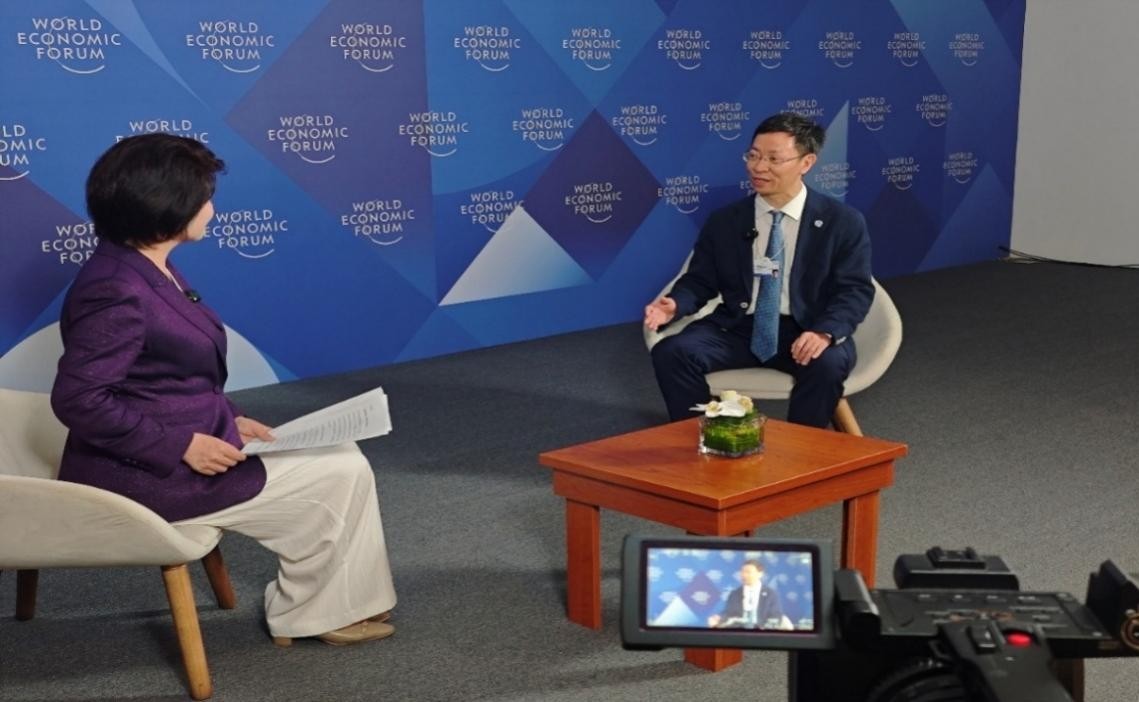
He stated that regional trade arrangements, including the Regional Comprehensive Economic Partnership (RCEP) and the United States-Mexico-Canada Agreement (USMCA), are deepening and emerging as a significant force in global trade governance. In the short term, minilateral cooperation serves as an important complement to the traditional multilateral trading mechanism; in the long run, it will further drive the reshaping of global trade rules and the improvement of the governance system. China should continue to diversify both its export markets and import sources, promote high-quality development of trade in services, and support enterprises in their transition from “going global” to “going deeper” to “going upward”, thereby continuously enhancing its international competitiveness and resource allocation capabilities.
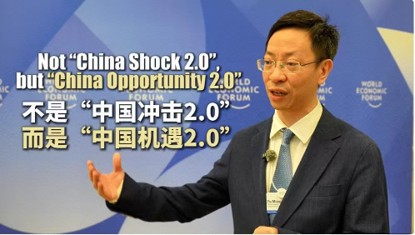
In response to the narrative of a so-called “China Shock 2.0” in the international community, Yu pointed out that such a view overlooks the positive effects of free trade and economic globalization. Made-in-China products and Chinese investment have provided the world with development opportunities and more diversified goods of higher quality, while also creating new growth room for consumers and economic development of host countries. Therefore, “China Shock 2.0” should actually be regarded as “China Opportunity 2.0”.
In terms of the prospects for China-ASEAN economic and trade cooperation, Yu noted that ASEAN is expected to increasingly become an important destination and regional production base for China’s intermediate goods exports, and will continue to benefit from deeper cooperation with China and integration into global value chains. The deep integration of regional industrial and supply chains will inject new impetus into regional economic development.
Regarding AI and talent development, he said that AI is a key engine for fostering new quality productive forces. Looking ahead, young students should not only master AI technologies but also strengthen their integration with the humanities and social sciences to grow into interdisciplinary talents with both technological proficiency and a humanistic foundation. Universities should coordinate the integrated development of education, technology, and talent, underpinning technological innovation and high-quality economic and social development through high-quality talent cultivation.
Bilateral Meeting to Expand International Cooperation
On the afternoon of June 24, Yu held a bilateral meeting with Sheikh Tanjeb Islam, Head of Event Editorial Team and Member of the Executive Committee of the WEF.
The two sides held in-depth exchanges on universities’ engagement in global governance, international think-tank cooperation, youth talent development, and the building of academic exchange platforms.
Yu noted that LNU, as a “Double First-Class” university, has distinctive strengths in economics and international trade. He expressed the hope to strengthen exchanges and cooperation with the WEF, engage in international academic dialogue and global research on governance, and further enhance the university's international influence.
Sheikh Tanjeb Islam spoke highly of LNU’s recent achievements in economics research, think-tank establishment, and international exchanges, and expected that both sides would engage in deeper and more practical cooperation in youth talent cultivation, academic exchanges, and the building of international cooperation platforms.
Closed-door Meeting to Share Academic Insights
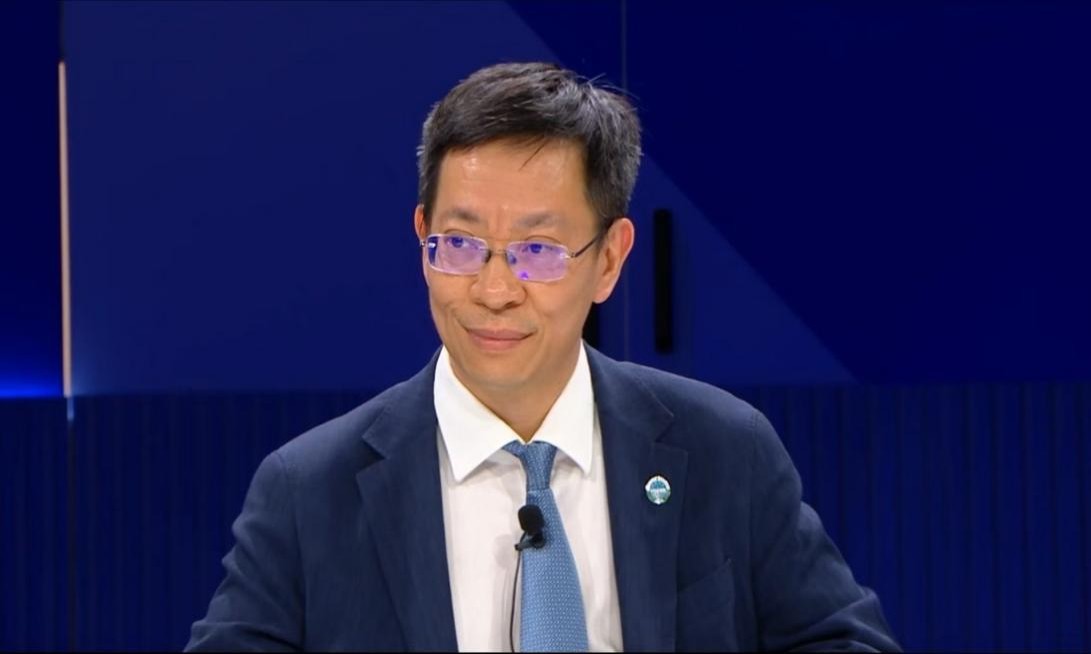
That evening, Yu was invited to attend a closed-door meeting of the Summer Davos Forum, where he engaged in in-depth exchanges with representatives from international organizations, renowned universities, research institutions, and the business community. Drawing on his extensive experience in international trade research and policy consulting, Yu took part in the discussions and shared his research findings and insights as a Chinese scholar.
The Summer Davos Forum, initiated by the WEF, is a high-level global dialogue platform that brings together representatives from government, business, and academia to explore new drivers for economic growth and new pathways for international cooperation. LNU will continue to leverage its disciplinary strengths and think-tank function, engage in international exchanges and cooperation, and enhance its capacity to serve national strategies and regional development, contributing wisdom and strength to building an open world economy.
Translated by: Zeng Xi
Edited by: Gao Mengdi, Liu Hanlin
Proofread by: Li Zhibin
Reviewed by: Jin Jinghua