The Annual Conference on Marxist educational thought and the Sixth Youth Forum, organized by the Academic Committee for the Study of Marxist educational thought and hosted by Liaoning University, was held at Liaoning University (LNU). Under the theme “Marxist educational thought and Chinese Education in the Age of Artificial Intelligence,” the forum brought together more than 200 participants, including experts, scholars, young faculty members, and graduate students from universities and research institutions such as Northeast Normal University, Southwest University, and Beijing Normal University. Professor Huo Chunhui, Member of the Standing Committee of the CPC Liaoning University Committee and Vice President of Liaoning University, attended the opening ceremony and delivered a speech. Also present were Professor Sun Zhendong from Southwest University, Professor Yang Zhaoshan from Northeast Normal University, and Professor Shu Zhiding from Huzhou Normal University, who serve in leadership roles on the Academic Committee for the Study of Marxist Educational Thought.
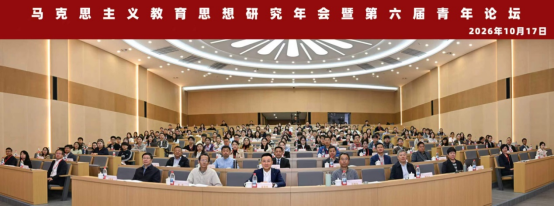
At the opening ceremony, Professor Huo Chunhui and Professor Sun Zhendong delivered speeches. The ceremony was chaired by Researcher Wang Shaoyuan, Director of the Institute of Higher Education of Liaoning University.
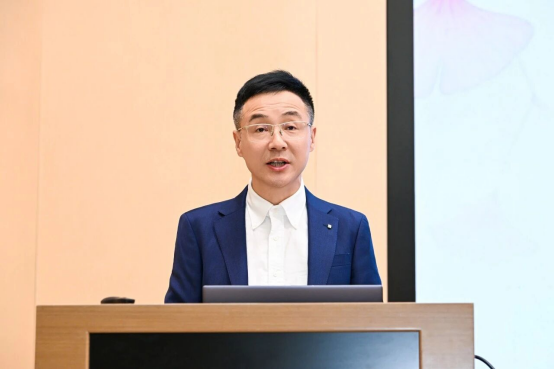
In his speech, Huo Chunhui emphasized that the forum’s theme, “Marxist educational thought and Chinese Education in the Age of Artificial Intelligence,” bears great relevance of the times, combining profound theoretical value with clear practical relevance and offering a meaningful response to educational development amid technological transformation. As artificial intelligence becomes increasingly integrated into education, it creates new opportunities to reshape talent cultivation models and innovate teaching and learning practices, while also posing challenges to preserve the essence of education and upholding ethical standards. Examining emerging educational issues arising from technological change through the lens of Marxist educational thought has become an essential task for higher education. He noted that the forum had received broad support, attracting participants from diverse backgrounds and research perspectives. It provided valuable opportunities to deepen research into Marxist educational thought, foster academic exchange and mutual learning, and establish a high-level platform for scholarly dialogue. He expressed his hope that the forum would strengthen exchanges and cooperation, advance the development of Marxist educational theory as an academic discipline, and contribute collective wisdom and efforts to educational reform and development in China in the new era.
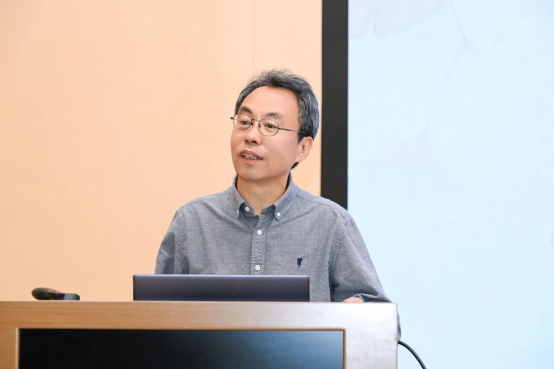
In his speech, Sun Zhendong noted that the conference focused on the inheritance and development of Marxist educational thought in the new era and addressed the profound transformation of education driven by artificial intelligence. It represented both a renewed examination of classical Marxist educational theory and a forward-looking exploration of educational transformation amid a new technological revolution, carrying significant theoretical and practical implications. He emphasized three core propositions of Marxist educational thought: the social nature of education, the all-round development of human beings, and the integration of education with productive labor. Technology is not inherently value-neutral. Marx’s analysis of large-scale machine production demonstrates that the fundamental problem lies not in machines themselves but in capital and private ownership, a logic equally applicable to artificial intelligence today. He argued that the integration of education and labor should not be interpreted narrowly. Marx referred to material production encompassing intellectual labor, a principle that remains valid in the age of artificial intelligence. He encouraged participating experts, scholars, faculty members, and students to engage in in-depth discussions and exchange diverse perspectives, providing theoretical insights and intellectual guidance for the development of Marxist educational theory in the age of artificial intelligence.
During the keynote session, Professors Shu Zhiding from Huzhou Normal University, Yu Qingchen from Beijing Normal University, Ning Bentao from East China Normal University, Zhang Baoge from Ningbo University, and Xiao Shaoming from South China Normal University delivered keynote presentations. The session was chaired by Professor Xie Xiaojuan, Dean of the School of Marxism at Liaoning University.
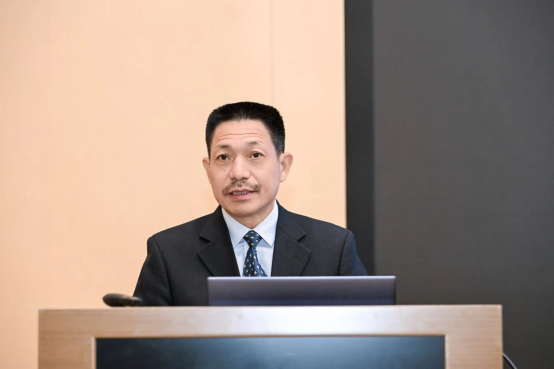
Drawing on Volume I of Capital, Professor Shu Zhiding examined Marx’s proposition on integrating productive labor with intellectual and physical education, arguing that this integration serves both as a means of increasing social production and as an important pathway toward the all-round development of human beings.
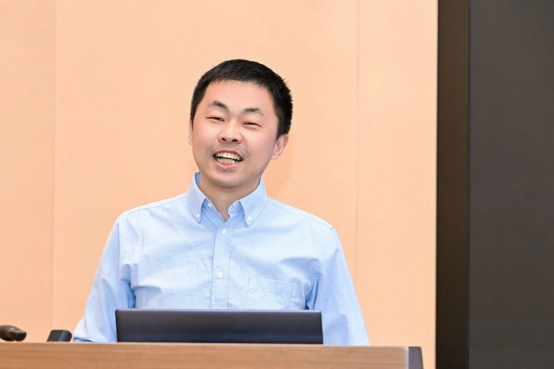
Professor Yu Qingchen explored how pedagogy emerged as an independent discipline and examined its academic and practical dimensions. He proposed that China’s independent knowledge system of pedagogy should focus on the educational affairs of China and the Chinese nation, while strengthening its autonomy in both knowledge production and application.
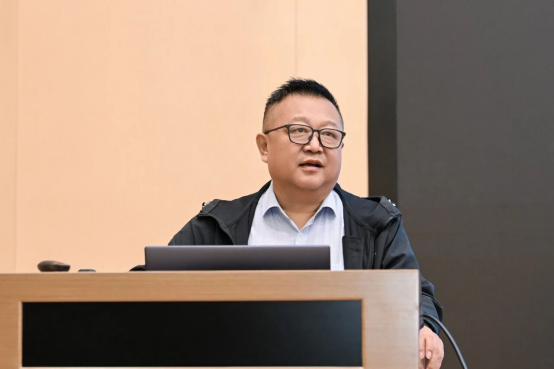
Addressing the disembodiment and formalization of labor education, Professor Ning Bentao proposed taking “reality” as its ontological value foundation, establishing the independent status of labor education through “seeking reality through labor,” and conceptualizing this process as the “three realms of seeking reality.”
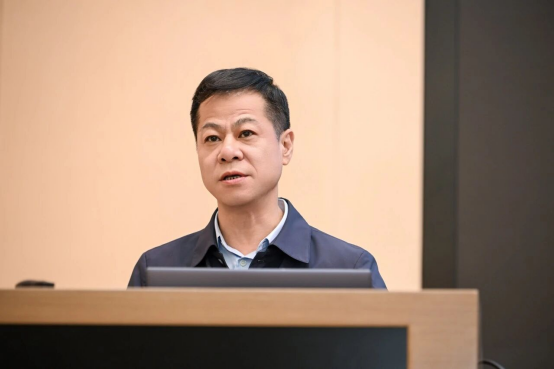
Professor Zhang Baoge focused on the differentiated development of senior high schools, analyzing threefold pressures from policy, technology, and society, along with five major constraints. He proposed five pathways to promoting diversified high school development: city-level coordination, curriculum clusters, diversified evaluation, integration of general and vocational education, and AI governance.
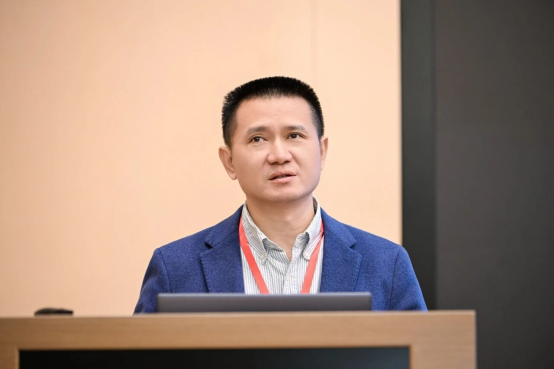
Professor Xiao Shaoming examined Marx’s classical discussions on the integration of education and labor, analyzed education as a mechanism of reproduction within the circulation of capital, and distinguished between “external integration” and “internal integration.” He called for preventing a “crisis of pervasive capitalization” and returning to the humanistic foundations of education.
The conference also featured presentations by faculty members and young scholars, parallel sessions, and concluding discussions. More than 280 papers were submitted, and over 80 faculty members and young scholars presented and exchanged ideas across six parallel sessions.
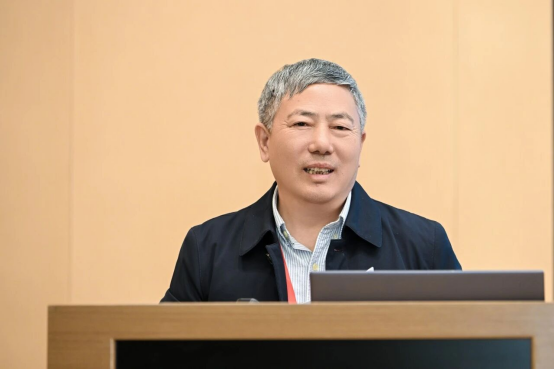
At the closing ceremony, Professor Yang Zhaoshan delivered a conference summary, encouraging young scholars to engage in close readings of classical Marxist texts and draw upon the standpoints, viewpoints, and methods of Marxist theory. The conference also put forward five recommendations for developing China’s independent knowledge system of pedagogy: taking Marxist educational thought as the guiding spirit of the system; responding to the demands of major educational reform practices through new research achievements grounded in the Chinese context; advancing the system through Marxist standpoints, viewpoints, and methods; deepening curriculum and teaching reform; and strengthening political awareness and institutional support.
The conference received journal support from Modern Education Management, Journal of Northeastern University (Social Science), Journal of Liaoning University (Philosophy and Social Sciences), and Journal of Shenyang Normal University (Social Science Edition).
Translated by: Tan Ruomeng
Edited by: Mark Moore
Proofread by: Li Zhibin
Reviewed by: Jin Jinghua