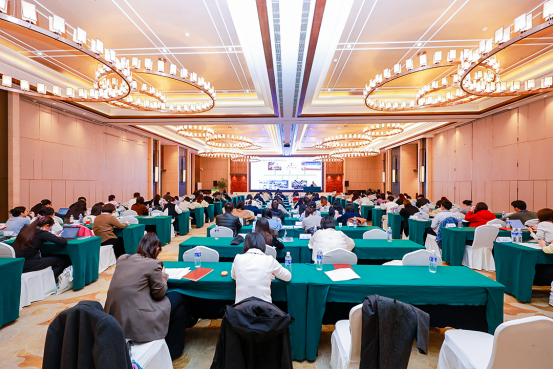
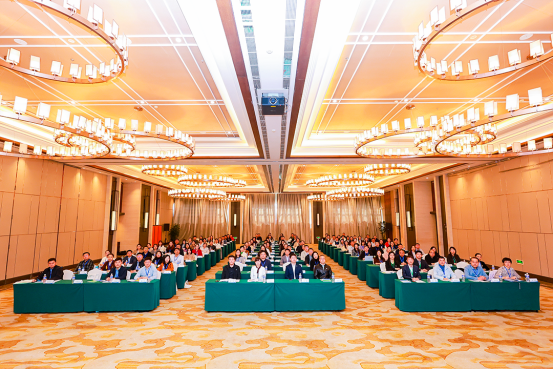
Recently, the 2026 Training Course on Enhancing the Psychological Health Literacy of International Program Students, also the 6th Empowerment Training Course for International Programs, organized by the Chinese Service Center for Scholarly Exchange (CSCSE) of the Ministry of Education and hosted by LNU, successfully commenced in Shenyang. Lu Hui, member of the Standing Committee of the CPC Committee of LNU and vice president of LNU, attended the opening ceremony and delivered an address. Yu Haiying, director of the Department of International Cooperation of CSCSE, delivered the opening remarks. More than 120 program directors, administrators, and frontline teachers from over 60 partner universities of the international programs nationwide attended the training.
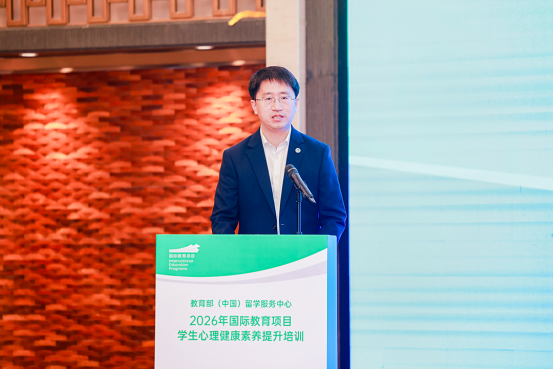
In his address, Lu Hui noted that international programs have the important mission of cultivating international talents with both a global vision and a sense of national identity. As international education continues to develop, challenges such as cross-cultural adaptation pressure, identity confusion, and anxiety about academic study and career development have become increasingly prominent. Mental health education for students, and psychological risks identification and crisis intervention have therefore become important tasks for partner universities to enhance their governance capabilities of education administration and safeguard the bottom line of talent cultivation. Effectively and meticulously delivering psychological education for students on international programs is both a practical necessity for protecting the healthy growth of young students and an inherent requirement for the standardized, connotation-focused and high-quality development of the programs. As a “Double First-Class” university with years of deep engagement in international education, LNU hopes that the training course will serve as a link to build bridges for communication among participation institutions nationwide, enable them to share and draw on each other’s experience in program delivery, enhance the real impact of psychological education, and jointly boost the high-quality development of international programs.
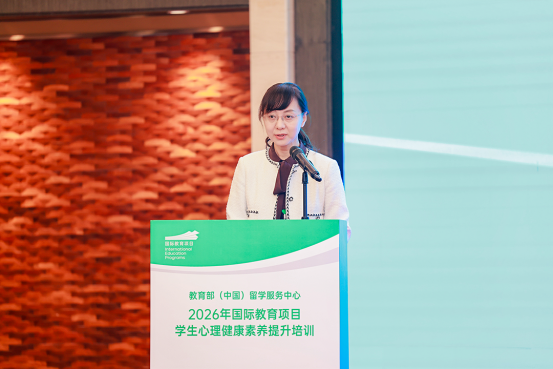
On behalf of CSCSE, Yu Haiying delivered the opening speech. She pointed out that in running international programs with universities at home and abroad, CSCSE has always stayed committed to the mission of cultivating talents for the Party and our country, carried out the fundamental task of fostering virtue through education, and cultivated international talents for the new era with a sense of identity, a global vision, and a sound personality. Mental health education is an important part in ensuring the quality of talent cultivation. It is not only a pioneering task in fostering virtue through education, but also a basic prerequisite for the healthy growth of students and an inherent requirement for the high-quality development of the programs. During the domestic stage, students of international programs face the pressures of bilingual teaching and academic advancement; during the overseas stage, they encounter culture shock and language barriers. Psychological dilemma is an unavoidable real challenge in running these programs, yet research on this group is relatively limited. CSCSE, together with LNU, organized this empowerment training course to enhance the effectiveness of talent cultivation in universities and to promote the high-quality and stable development of international programs.
The training adopts a problem-oriented and practice-based approach, including special lectures, on-site instruction, group workshops, and campus visit sessions. It delivers in-depth explanations centering on risk identification, psychological crisis intervention, institutional development analysis, identity building, and psychological capacity building, creating a platform for mutual learning and exchange in psychological education for international programs.
Taking the hosting of the training course as an opportunity, LNU will continue to deepen exchanges and cooperation with universities across the country, draw on their advanced practices, and steadily improve its psychological education system for cross-cultural contexts. The university will constantly improve the quality of international talents cultivation and contribute to serving the national strategy of opening up in education and fostering a new generation of international talents with both a sense of national identity and a global vision.
Translated by: Li Xinyuan
Edited by: Mark Moore
Proofread by: Mu Xiaolin
Reviewed by: Jin Jinghua