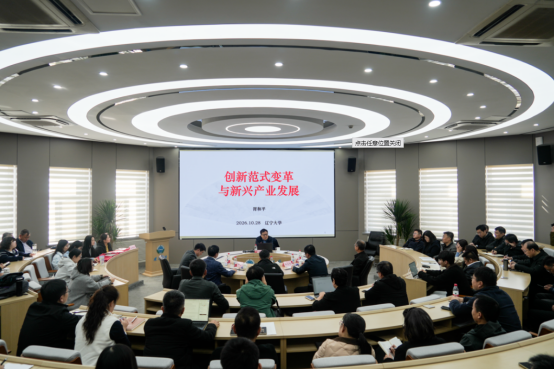
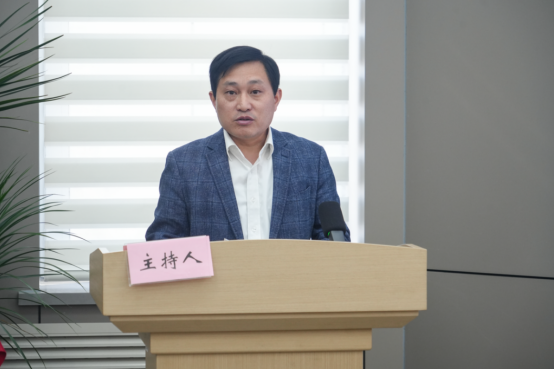
On October 28, 2026, Liaoning University (LNU) held the 21st “Tang Duo Lecture on Governance” and the 22nd “Endeavor Lecture Series” in Academic Lecture Hall 401 of Administration Building at Puhe Campus. Xu Heping, former Deputy Director of the General Office of the Ministry of Science and Technology of China, was invited as the keynote speaker. Vice President Lu Anhui attended and introduced the speaker. Also attending were Bai Yongsheng, Member of the Standing Committee of the CPC Liaoning University Committee, Director of its Organization Department and President of the Party School; Yang Gongyan, Director of the Office of Social Sciences Research; and Wang Weiguang, Deputy Director of the Faculty of Economics. The lecture was chaired by Zhang Xinghong, Assistant to the President.
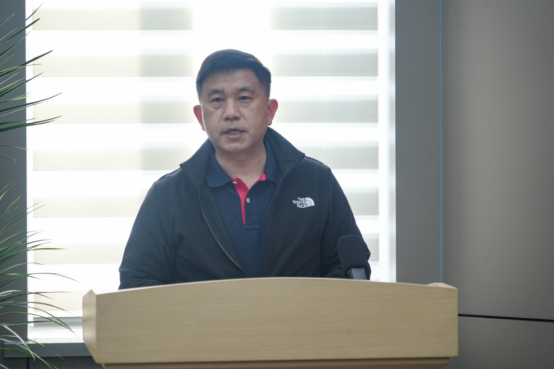
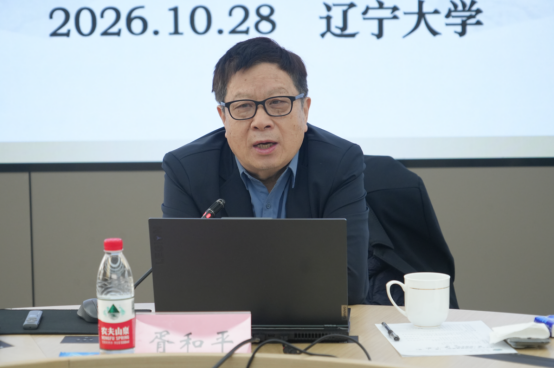
In his lecture titled “Changes in Innovation Paradigms and the Development of Emerging Industries,” Xu Heping systematically outlined new characteristics of scientific and technological innovation in the latest wave of technological revolution, examined trends in emerging industries, and explored pathways for developing new quality productive forces through technological innovation. He noted that a new round of global scientific and technological revolution and industrial transformation is gathering momentum. China’s science and technology development has entered a new historical stage amid a complex international environment, making it essential to improve the overall effectiveness of its national innovation system. Research paradigms are undergoing profound changes, interdisciplinary integration is accelerating, and clusters of breakthroughs are emerging in frontier technologies. Innovation models, innovation actors, and forms of capital participation are also changing significantly, making innovation systems a focal point of international competition. He emphasized that, in response to these developments, China should follow the strategic plans of the 15th Five-Year Plan, prioritize scientific and technological innovation, and coordinate the transformation and upgrading of traditional industries, the expansion of emerging industries, and the cultivation of future industries. Given their forward-looking and disruptive nature, future industries should be developed through differentiated, locally tailored strategies based on national needs and technological conditions. Forward-looking plans should focus on quantum technologies, biomanufacturing, embodied intelligence, and other fields. He called for a supportive industrial innovation ecosystem, coordination among science and technology, industry, capital, and other factors, and deeper integration of the innovation, industrial, capital, and talent chains.
Finally, he offered three reflections. First, industrial transformation is a long-term process. Technological determinism should be rejected, uncertainty in technological development should be assessed rationally, and technological breakthroughs should be balanced with market cultivation. Second, efforts to achieve the comprehensive revitalization of Northeast China should remain grounded in the real economy, with industrial upgrading driven by scientific and technological innovation. Third, China should accelerate the development of a theory of innovation-driven development with Chinese characteristics, deepen reforms of the science and technology system and innovation governance, foster a culture of innovation, and strengthen the foundations of talent development and education to inject new momentum into Chinese modernization.
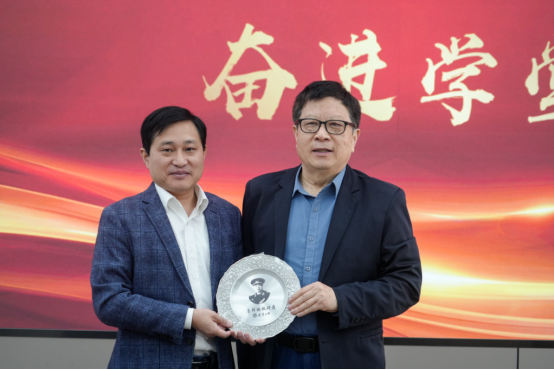
After the lecture, Zhang Xinghong presented Xu Heping with a commemorative plaque for the “Tang Duo Lecture on Governance.”
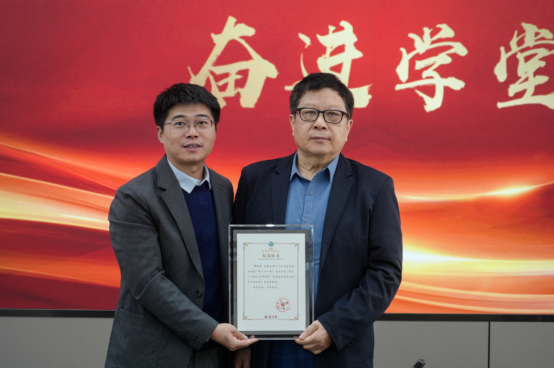
Yang Gongyan presented Xu Heping with a commemorative certificate for the “Tang Duo Lecture on Governance.”
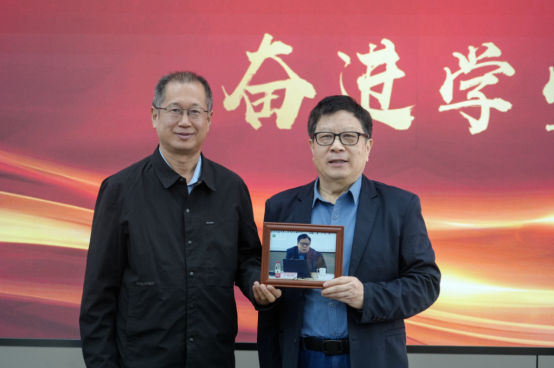
Wang Weiguang presented Xu Heping with a commemorative photograph.
More than 100 participants, including division-level officials, faculty members, and student representatives from Liaoning University, attended the lecture in person.
Xu Heping, the keynote speaker, worked for many years at the Chinese Academy of Social Sciences, conducting research on industrial economics, technological innovation, and corporate development strategies. He later joined the Ministry of Science and Technology, where he studied science and technology development strategies and policies. He participated in formulating national science and technology strategies, policies, and plans, including the national medium- and long-term science and technology development plan, the development of the national innovation system, and the innovation-driven development strategy. He previously served as an Inspector at the General Office of the Ministry of Science and Technology, Director of its Research Office, President of the National Association for Research on Revitalizing Urban Economies through Science and Technology, and Distinguished Professor of Management Practice at Tsinghua University School of Economics and Management. He is currently a Senior Research Fellow at the Hongqi Think Tank and Vice President of the Northeast Asia Institute of Digital Economy.
Translated by: Tan Ruomeng
Edited by: Mark Moore
Proofread by: Li Zhibin
Reviewed by: Jin Jinghua